

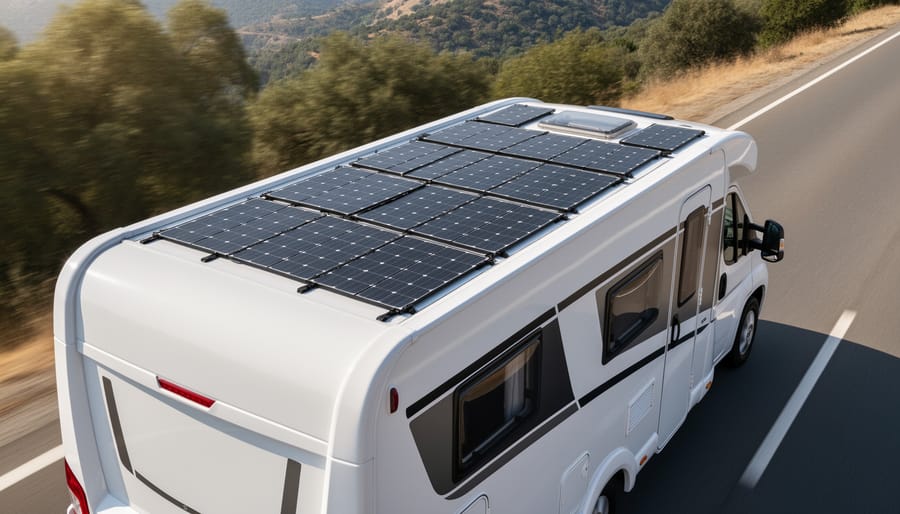
Flexible solar panels offer RV owners a lightweight, low-profile power solution that installs in hours, typically generating 100 to 400 watts per panel without the aerodynamic drag or mounting complexity of rigid glass alternatives. These thin-film or monocrystalline panels bend to follow your RV’s curved roof, weigh 70-80% less than traditional panels, and can be installed with adhesive backing rather than invasive roof penetrations that risk leaks.
The appeal is clear: you get renewable energy without compromising fuel efficiency or roof integrity. But flexible panels aren’t automatically the right choice for every RV setup. They come with tradeoffs in efficiency, durability, and cost-per-watt that matter significantly over a five- to ten-year ownership period.
Understanding which type of flexible panel matches your RV’s roof material, your power needs, and your travel style will determine whether you enjoy quiet, off-grid freedom or face premature panel degradation and underwhelming output. A full-time RVer running air conditioning has different requirements than a weekend camper charging phones and LED lights.
This guide walks you through the core factors that separate excellent flexible panels from budget models that fail within two years. You’ll see how construction quality, temperature tolerance, and wattage-to-weight ratios translate into real-world performance. We’ll compare the three main flexible panel technologies available in 2026, identify the most common installation mistakes that void warranties, and match specific panel types to different RV classes. By the end, you’ll know exactly which flexible solar setup delivers reliable power for your adventures without the guesswork.
What Makes Flexible Solar Panels Different
Flexible solar panels break away from the traditional glass-and-aluminum construction that has dominated RV solar for decades. Instead of a rigid aluminum frame with tempered glass protecting crystalline cells, flexible panels use thin-film technology layered onto lightweight substrates like polymer or thin metal. The cells themselves are either monocrystalline wafers sliced incredibly thin or deposited thin-film materials such as CIGS (copper indium gallium selenide). An ETFE coating or similar protective layer replaces the heavy glass, creating a panel that typically measures just 2-3mm thick compared to the 35-40mm profile of rigid panels.
This construction delivers substantial weight savings. A 100-watt flexible panel usually weighs 2-4 pounds, while its rigid equivalent tips the scales at 15-20 pounds. For RV owners watching roof load limits or concerned about fuel efficiency, that difference multiplies across a multi-panel system. A 400-watt flexible setup might add only 12-16 pounds to your roof versus 60-80 pounds for rigid panels.
The flexibility itself opens installation possibilities that rigid panels simply can’t match. Most flexible panels can bend to a 30-degree curve, making them ideal for the aerodynamic, curved roofs found on Class B vans and many modern travel trailers. You’re not limited to flat mounting surfaces or forced to use bulky tilt brackets that catch wind and create noise at highway speeds.
Installation typically involves adhesive backing rather than drilling and bolting. You clean the roof surface, peel the backing, and press the panel down. This method eliminates roof penetrations, one of the primary causes of RV water leaks. The low profile also means better aerodynamics and a cleaner appearance. These panels sit nearly flush with the roof surface, maintaining your RV’s sleek lines rather than announcing their presence with raised frames and visible hardware.
Key Factors When Choosing Flexible Solar Panels
Power Output and Efficiency Ratings
Flexible solar panels for RVs typically come in wattage options ranging from 50W to 200W per panel, with some premium models reaching 300W. Most RV owners start with 100W panels as their baseline building block, adding more based on their power consumption.
Efficiency ratings tell you how much sunlight the panel converts into electricity. Monocrystalline flexible panels lead the pack at 18-23% efficiency, while CIGS thin-film models range from 13-17%, and amorphous silicon panels fall between 6-10%. A 100W panel rated at 20% efficiency will outperform a 100W panel at 12% efficiency in real-world conditions, particularly during morning, evening, and overcast periods when sunlight is less intense.
To calculate your actual power needs, list every appliance you’ll run and its wattage draw. A typical RV refrigerator uses 150-200W while running, LED lights consume 10-15W each, a laptop needs 50-75W, and a microwave can spike to 1000W or more. Multiply each device’s wattage by the hours you’ll use it daily to get watt-hours.
For example, if you run a 180W fridge for 8 hours (1,440Wh), four LED lights for 4 hours each (240Wh), and charge a laptop for 3 hours (180Wh), you need roughly 1,860Wh per day. Since panels rarely produce their rated output all day, divide your total watt-hours by 5 sun-hours (conservative estimate) to determine minimum panel wattage needed. In this case, you’d want at least 375W of panel capacity, which typically means four 100W flexible panels.
Durability and Weather Resistance
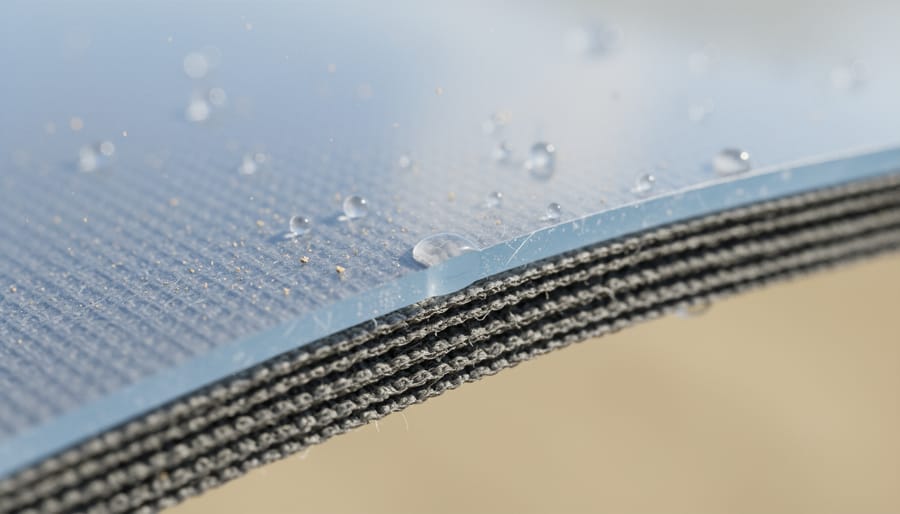
The protective layer on a flexible solar panel determines how well it withstands years of RV travel. Most premium panels use ETFE (Ethylene Tetrafluoroethylene) coating, which outperforms alternatives like PET or TPT laminates in UV resistance and temperature tolerance. ETFE-coated panels maintain 85-90% of their original output after a decade of exposure, while cheaper coatings may degrade to 70-75% efficiency in the same timeframe. This performance advantage shows clearly in 10-year solar panel data comparing coating materials under real-world conditions.
For RVers who frequent coastal areas, saltwater corrosion resistance becomes critical. Quality flexible panels feature sealed junction boxes and corrosion-resistant connectors that prevent saltwater intrusion during beach camping or ocean-side parking. The panel surface itself should repel salt buildup rather than allowing it to create efficiency-robbing hotspots.
Expect 10-15 years of usable life from well-made flexible panels, though this assumes proper installation and reasonable care. Panels subjected to constant flexing stress, improper mounting that traps heat, or regular harsh chemical cleaners will fail sooner. The thinner construction compared to rigid panels means there’s less material to absorb impacts from hail or falling branches, so shelter your RV during severe weather when possible.
Weight and Thickness Considerations
Flexible solar panels typically weigh between 2 and 6 pounds per 100 watts of capacity, roughly 70% lighter than equivalent rigid panels. A 100W flexible panel averages 0.1 to 0.15 inches thick, compared to 1.5 inches for traditional framed panels. This weight advantage matters more than you might think.
Most RV roofs can safely support 250-300 pounds, but that includes air conditioners, vents, satellite dishes, and you during maintenance. Every pound counts when you’re planning a multi-panel array. A 400W flexible system adds just 8-24 pounds versus 50-60 pounds for rigid panels, leaving capacity for essential roof equipment.
The slim profile reduces wind resistance during highway travel. Rigid panels with frames create drag that measurably decreases fuel economy at speeds above 55 mph. Flexible panels sit flush against the roof, typically adding less than 2mm of height, maintaining your RV’s original aerodynamic profile. This translates to quieter travel and less strain on roof-mounting adhesives over thousands of miles of vibration and crosswinds.
Installation Method Compatibility
Flexible solar panels offer two primary mounting approaches, each with distinct advantages. Adhesive-mounted panels use specialized marine-grade bonding tape or liquid adhesive applied directly to the RV roof surface. This method creates a permanent, low-profile installation that won’t catch wind during highway travel and works exceptionally well on curved surfaces like van roofs. The downside? Removal damages both the panel and roof surface, and you’ll need pristine, non-porous roof material for proper adhesion.
Corner-grommet mounting involves drilling small holes at panel corners and securing with screws or bolts. This approach allows panel removal for storage or relocation but requires flat or minimally curved surfaces. Each penetration point creates a potential leak risk if not properly sealed with marine-grade sealant like Dicor or Sikaflex.
Most RV owners with basic DIY skills can handle installation themselves, particularly adhesive methods that require no drilling. The process typically takes 2-4 hours including surface preparation, positioning, and wiring connections. However, if you’re uncomfortable working on your roof, drilling through your RV’s structure, or connecting to your electrical system, professional installation ($200-500 depending on system complexity) ensures proper weatherproofing and electrical safety while preserving warranties.
Warranty Coverage and Support
Most flexible solar panels come with warranties significantly shorter than their rigid counterparts, typically 2-5 years compared to 25+ years for traditional panels. This reflects the technology’s relative newness and manufacturers’ uncertainty about long-term durability in mobile applications.
Standard coverage usually includes defects in materials and workmanship but rarely covers power output degradation, which is a major limitation. Read the fine print carefully: many warranties become void if you install the panels yourself or use adhesives not specifically approved by the manufacturer. Water damage and physical impact are almost never covered, even though these are common risks for RV roofs.
Manufacturer reputation matters enormously when warranty claims arise. Research customer reviews focused specifically on warranty experiences, some brands are known for quick replacements while others demand extensive documentation or simply become unreachable after the sale. Established companies with North American support teams generally handle claims more reliably than direct-from-China sellers, though you’ll pay a premium for that peace of mind.
Types of Flexible Solar Panels Compared
Monocrystalline Flexible Panels
Monocrystalline flexible panels represent the premium tier of RV solar technology, delivering efficiency ratings between 18-23%, significantly higher than other flexible options. This means you’ll generate more power from each square foot of roof space, a crucial advantage for smaller RVs like Class B vans where every inch counts.
These panels excel in low-light conditions, producing usable power during overcast days or when parked in partial shade. The monocrystalline cells maintain better performance as temperatures rise, which matters when your RV roof reaches 150°F on summer days.
Expect to pay 30-50% more than CIGS alternatives, with quality 100-watt panels typically ranging from $200-300. This premium pricing reflects the sophisticated manufacturing process and superior silicon quality.
For RVers with curved roofs or limited mounting areas who need maximum power output, monocrystalline flexible panels justify their cost. They’re particularly valuable for full-time travelers running laptops, refrigerators, and other power-hungry devices who can’t afford to sacrifice efficiency for savings.
CIGS Thin-Film Panels
CIGS (Copper Indium Gallium Selenide) thin-film panels strike an optimal balance between performance and practicality for most RV owners. With efficiency ratings between 13-17%, they deliver roughly 70-85% of what you’d get from monocrystalline panels while being significantly lighter and more pliable. A typical 100W CIGS panel weighs around 3-4 pounds and can bend up to 30 degrees, making installation on curved RV roofs straightforward.
The moderate pricing sits between budget amorphous silicon and premium monocrystalline options, usually $150-250 per 100W panel in 2026. CIGS technology handles temperature fluctuations better than crystalline panels, maintaining efficiency in the heat that builds up on RV roofs during summer travel. They also perform reasonably well in partial shade conditions, though not as impressively as amorphous silicon.
For weekend warriors and full-time RVers who need reliable daily power without maxing out their budget, CIGS panels represent the sweet spot. They’re durable enough for constant road vibration and weather exposure while providing sufficient power output for running lights, fans, charging devices, and small appliances throughout your travels.
Amorphous Silicon Panels
Amorphous silicon panels represent the budget-friendly entry point into flexible solar for RVs, though they come with significant trade-offs. These panels typically deliver 6-10% efficiency, meaning you’ll need roughly double the surface area compared to monocrystalline options to generate the same power output.
Where amorphous silicon shines is performance in less-than-ideal conditions. They handle partial shade and diffuse light better than crystalline alternatives, making them useful for heavily treed campgrounds or overcast climates. The lower manufacturing costs translate to prices 40-60% below monocrystalline flexible panels.
For RV applications, amorphous silicon works best as supplemental charging rather than your primary power source. Think maintaining battery charge during storage, trickle charging while parked under trees, or powering low-draw accessories like ventilation fans. The larger physical footprint needed for meaningful power output makes them impractical as the sole solar solution on space-limited RV roofs. If you’re testing solar without major investment or need backup charging capacity, amorphous silicon delivers adequate performance at minimal cost.
Recommended Configurations for Different RV Types
Class B Vans and Camper Vans
Class B vans and camper vans present unique solar challenges due to their compact, often curved rooftops. A 200-400W flexible panel system typically provides sufficient power for essential electronics, LED lighting, a refrigerator, and occasional laptop charging without overwhelming the limited roof real estate. The curved roof profiles on many Sprinter conversions, ProMasters, and Transit vans make flexible panels the obvious choice since rigid panels can’t conform to these surfaces without custom mounting hardware that adds weight and complexity.
Prioritize panels weighing under 4 pounds per 100W to preserve your van’s fuel efficiency and handling. Every pound matters in a vehicle this size. For accurate solar kit sizing calculate your daily amp-hour consumption and account for 3-4 hours of effective sunlight during travel. Most weekend warriors find 300W adequate, while full-timers should lean toward 400W paired with a compact lithium battery bank. Install panels lengthwise along the van’s centerline to maintain aerodynamics and minimize wind resistance at highway speeds.
Class C Motorhomes
Class C motorhomes typically need 400-800W of solar capacity to handle air conditioning, refrigeration, and entertainment systems without constantly running a generator. Your roof offers more space than a van but less than a fifth wheel, making it ideal for strategic panel placement.
A hybrid approach often works best here: mount 200-400W of rigid panels in high-performance areas (flat sections near the front), then add 200-400W of flexible panels on curved rear caps or around roof vents and AC units. This maximizes total wattage while working with your roof’s contours.
Consider your travel style when sizing the system. Weekend campers running minimal electronics can thrive with 400W, while full-timers who boondock frequently should target 600-800W to maintain battery health during extended off-grid stays. Factor in seasonal variations, a 600W system that feels adequate in summer sun may struggle during shorter winter days. Always pair your panels with a quality MPPT charge controller rated for your total system wattage to avoid bottlenecking performance.
Travel Trailers and Fifth Wheels
Travel trailers and fifth wheels offer the most flexibility when designing a solar system, with expansive roof real estate that can accommodate anywhere from 300W for weekend camping to 1000W+ for full-time living. A typical 25-foot travel trailer can comfortably fit 600-800W of flexible panels, while larger fifth wheels often support systems exceeding 1200W when combining flexible and rigid panels.
The key consideration is aerodynamics during towing. Flexible panels installed flush to the roof create minimal wind resistance compared to tilted rigid mounts, potentially improving fuel efficiency by 2-3% on long hauls. Position panels toward the front third of the trailer to reduce stress on the adhesive at highway speeds, and avoid placing them near roof vents or air conditioners where turbulence peaks.
For full-timers, consider a hybrid approach: mount flexible panels on curved areas and slide-outs where rigid panels won’t work, then use remaining flat space for higher-efficiency rigid panels. This maximizes your total wattage while maintaining the aerodynamic benefits where they matter most.
Common Mistakes to Avoid
Underestimating Power Needs
One of the most common missteps is underestimating how much power your RV actually consumes daily. Start by listing every device you’ll run, refrigerator, lights, water pump, phone chargers, laptops, and note each one’s wattage and hours of use. Multiply wattage by hours to get watt-hours per day, then sum everything.
Here’s where many go wrong: they size their system to match this number exactly. Solar panels rarely operate at peak efficiency throughout the day. Angle shifts, temperature effects, and dust accumulation all reduce output. Plus, weather doesn’t cooperate on demand.
Always add a 20-30% buffer to your calculated needs. If you need 1,000 watt-hours daily, aim for at least 1,200-1,300 watts of generating capacity. This cushion accounts for cloudy stretches, winter sun angles, and the inevitable power drain you didn’t anticipate. Running short on power during extended boondocking isn’t just inconvenient, it can damage your battery bank through deep discharge cycles.
Ignoring Charge Controller Compatibility
Mismatched charge controllers cause more battery damage than any other flexible panel installation error. Your panels might generate 18V while your battery needs 14.4V for proper charging, without an MPPT controller to regulate this voltage difference, you’ll overcharge and potentially ruin your battery bank within months. PWM controllers, though cheaper, waste 20-30% of your flexible panel’s output and can’t handle the voltage variations that occur as panels heat up during travel. An MPPT controller costs $150-300 more but pays for itself through increased charging efficiency and battery longevity. Before finalizing your charge controller setup verify it matches your panel’s maximum voltage and your RV battery charger system voltage (12V, 24V, or 48V). Most quality MPPT units include temperature sensors and multi-stage charging profiles that protect lithium and AGM batteries from the voltage spikes that flexible panels can produce.
Prioritizing Price Over Quality
The $150 flexible panel might seem like a bargain until it starts delaminating six months into your cross-country trip. Cheap flexible panels typically use inferior ETFE coatings that crack under UV exposure, adhesives that fail in temperature extremes, and cells with efficiency degradation rates of 3-5% annually instead of the 0.5-1% you’ll see from reputable manufacturers.
Quality indicators matter more than the price tag. Look for manufacturers offering minimum 2-year warranties (budget panels rarely exceed one year), published efficiency ratings from independent testing labs, and responsive customer service with actual technical staff. Check Amazon reviews beyond the star rating, search for comments about “delamination,” “efficiency drop,” or “warranty claim” to spot patterns.
A $400 quality panel that produces reliable power for 12 years costs you $33 annually. That $150 panel requiring replacement after three years? You’re paying $50 per year, plus the hassle of reinstallation and the power you lost during failures. Factor in the reality that solar installations on RV roofs aren’t simple weekend projects to repeat.
Installation and Maintenance Best Practices
Installing flexible solar panels correctly determines whether they’ll deliver reliable power for years or fail prematurely. Clean your RV roof thoroughly with isopropyl alcohol before installation, removing all dirt, wax, and oxidation that could compromise adhesive bonding. Mark panel placement carefully to avoid shading from roof vents, air conditioners, or satellite dishes, even small shadows can reduce output by 40% or more. Apply panels during warm weather (70-90°F) when adhesives cure properly, and use the recommended primer if specified by your manufacturer.
Press panels firmly from the center outward to eliminate air bubbles, which create hot spots that degrade cells over time. Route cables through existing roof penetrations when possible, and seal any new holes with marine-grade sealant to prevent leaks. Connect to an MPPT charge controller that matches your panel voltage, and verify proper polarity before powering up, reversed connections can destroy electronics instantly.
Maintenance for flexible panels requires less effort than rigid systems but shouldn’t be neglected. Wash panels monthly with soft cloths and plain water to remove dust, pollen, and road grime that block sunlight. Avoid abrasive cleaners or brushes that can scratch protective ETFE coatings. Inspect adhesive edges quarterly for lifting, especially after extreme heat or cold, and reseal with manufacturer-approved adhesive if needed.
Check wiring connections every six months for corrosion, particularly where cables enter the RV. Monitor output through your charge controller to catch performance drops early, a sudden 20% decrease usually indicates shading issues, wiring problems, or panel damage. Proper battery maintenance complements solar system care, ensuring your panels’ generated power gets stored efficiently. During winter storage, disconnect panels from the controller to prevent trickle discharge through system electronics, but leave them exposed to prevent moisture buildup underneath.
What to Look For
When evaluating flexible solar panels for your RV, prioritize these critical buying factors to ensure you make a sound investment.
Power requirements should drive your decision. Calculate your daily watt-hour consumption by listing all appliances you’ll run, their wattage, and usage hours. Add a 25-30% buffer for inefficiencies and cloudy days. Most RVers find 400-800W adequate for basic needs, while full-timers often require 1000W or more.
Build quality directly impacts longevity. Look for panels with ETFE coating rather than PET laminate, ETFE resists UV degradation and scratching far better. Check the manufacturer’s testing certifications and verify the warranty covers both materials and power output degradation.
Weight-to-power ratio matters more than absolute wattage. A 100W panel weighing 2.5 pounds performs better for RV applications than a 4-pound equivalent, especially when mounting multiple panels.
Installation system should match your roof type. Curved fiberglass roofs need fully flexible panels with strong adhesive backing, while flat metal roofs can accommodate semi-flexible options with corner mounting. If you’re planning a complete power setup, consider how individual panels will integrate when you choose an RV kit with compatible components.
Recommendations by Use Case

For weekend warriors who primarily camp with hookups and need backup power, a single 100W CIGS panel paired with a 100Ah lithium battery covers essentials like lights, phone charging, and small 12V appliances. This entry-level setup costs around $300-400 total and handles occasional boondocking without major lifestyle changes.
Full-time RVers living off-grid need 400-600W of flexible panels minimum, ideally monocrystalline for maximum efficiency per square foot. Combine this with 300-400Ah battery capacity and an MPPT controller to run refrigerators, laptops, and water pumps reliably. Budget $1,500-2,500 for quality RV system components that deliver consistent performance.
Budget-conscious buyers should focus on 150-200W CIGS panels from established manufacturers rather than chasing rock-bottom prices on unknown brands. Mid-tier options from Renogy or Rich Solar provide 12-15 year lifespans at $200-300 per 100W, avoiding the premature failures common with ultra-cheap alternatives.
For curved roof Class B vans where rigid panels won’t work, invest in premium monocrystalline flexible panels despite higher upfront costs, their superior efficiency justifies the price when roof space is your limiting factor.
Frequently Asked Questions
Can you really power your RV with panels you can practically roll up? Flexible solar panels raise plenty of questions for first-time buyers, particularly around durability and real-world performance. Here are answers to what RV owners most commonly ask before making a purchase decision.
Can flexible solar panels withstand hail damage?
Quality flexible panels with ETFE coating can handle hail up to 1 inch diameter, though they’re more vulnerable than tempered glass rigid panels. Most manufacturers test to withstand impacts from typical weather events, but severe hailstorms may cause damage that affects long-term performance.
Do flexible panels work effectively in winter conditions?
Flexible panels continue generating power in winter, though output drops 10-25% due to shorter days and lower sun angles. Snow must be cleared manually since flexible panels don’t generate enough heat to melt accumulation, and their dark surface actually makes snow stick more readily than on rigid panels.
Is it safe to walk on flexible solar panels?
Walking on flexible panels voids most warranties and can cause micro-cracks in the cells that reduce efficiency over time. While some manufacturers claim their panels tolerate foot traffic, repeated walking creates stress points that shorten panel lifespan significantly.
How does performance compare between flexible and rigid panels?
Rigid panels typically deliver 5-8% more power per square foot due to better cooling and higher-efficiency cells. Flexible panels run hotter because they sit flush against the roof without airflow underneath, which reduces their output by 10-15% on hot days compared to laboratory ratings.
Beyond these core concerns, RV owners frequently wonder about system reliability when panels are wired in series. If one flexible panel in a series configuration fails or gets shaded, it creates a bottleneck that reduces output from the entire string to match the weakest panel. This is why many experienced RV solar users install each panel with its own charge controller or use parallel wiring instead, accepting the slight voltage efficiency trade-off for better fault tolerance during travel when partial shading is common.
Another practical question involves replacement timeline. While manufacturers advertise 10-15 year lifespans, real-world experience suggests flexible panels may need replacement after 7-10 years of full-time RV use, especially if mounted where they experience constant flexing from roof movement and temperature cycling. The adhesive bond also tends to fail before the panel itself stops working, requiring re-attachment or replacement even when the panel still generates power. Budget for eventual replacement as part of your long-term RV solar investment rather than expecting flexible panels to last as long as their rigid counterparts.
Choosing the right flexible solar panels for your RV comes down to three core decisions: matching power output to your actual consumption needs, selecting a panel type that fits your roof space and budget, and prioritizing quality over initial cost savings. The panels you install today will power thousands of miles of adventures, so take time to honestly assess your travel style, climate zones, and energy demands before committing.
Flexible solar technology delivers freedom that extends beyond the electrical system. You’ll reduce generator runtime, eliminate noisy campground hookup negotiations, and access remote locations that rigid panel setups can’t reach. The environmental impact adds up quickly. A 400-watt flexible system offsets roughly 500 pounds of carbon dioxide annually while eliminating the fuel consumption and noise pollution associated with generator use.
The technology continues advancing rapidly. Efficiency ratings climb each year while prices trend downward, making 2026 an excellent time to invest in flexible panels for RV applications. Manufacturers now offer better warranties, improved ETFE coatings resist UV degradation more effectively, and installation methods have become genuinely DIY-friendly for most RV owners.
Start with your power audit, define your must-have features, and choose panels that support your specific RV lifestyle rather than chasing the highest wattage or lowest price. Your solar investment should enhance the adventures you’re already planning, turning your RV into a self-sufficient basecamp wherever the road leads.


Solar Fence Solutions Reviews: Decorative Lights vs. Electric Energizers for 2026
Flexible solar panels offer RV owners a lightweight, low-profile power solution that installs in hours, typically generating 100 to 400 watts per panel without the aerodynamic drag or mounting complexity of rigid glass alternatives. These thin-film or monocrystalline panels bend to follow your RV’s curved roof, weigh 70-80% less than traditional panels, and can be installed with adhesive backing rather than invasive roof penetrations that risk leaks. The appeal is clear: you get renewable energy without compromising fuel efficiency or roof integrity. But flexible panels aren’t automatically the right choice for every RV ...