

Document your solar panel system completely before listing, including warranties, installation certificates, performance data, and financing agreements. Buyers and their lenders will scrutinize these details, and Property Saviour research shows homes with organized solar documentation sell 15% faster than those requiring buyers to chase paperwork.
Understand your ownership structure immediately. Owned systems typically add 3-4% to home values and transfer smoothly at closing. Leased panels require buyer assumption of your agreement, which complicates financing since many mortgage lenders reject properties with solar leases or require extensive underwriting. Contact your solar provider now to clarify transfer procedures, remaining payments, and whether the lease can be paid off before sale.
Obtain a professional appraisal that accounts for your solar investment. Standard comparative market analysis often misses solar value because appraisers lack training in renewable energy systems. Request an appraiser certified in solar valuation or provide comparable sales data from homes with similar installations in your area.
Market the financial benefits aggressively by calculating exact savings. Show potential buyers monthly utility bills versus pre-solar costs, estimated annual savings over the system’s lifetime, and environmental impact metrics like carbon offset. Quantified data converts eco-conscious shoppers into serious buyers and justifies premium pricing.
Address buyer concerns proactively about maintenance, roof warranties, and system lifespan in your listing materials. Transparency about panel age, inverter condition, and any existing roof assessments prevents deal-killing surprises during inspection periods.
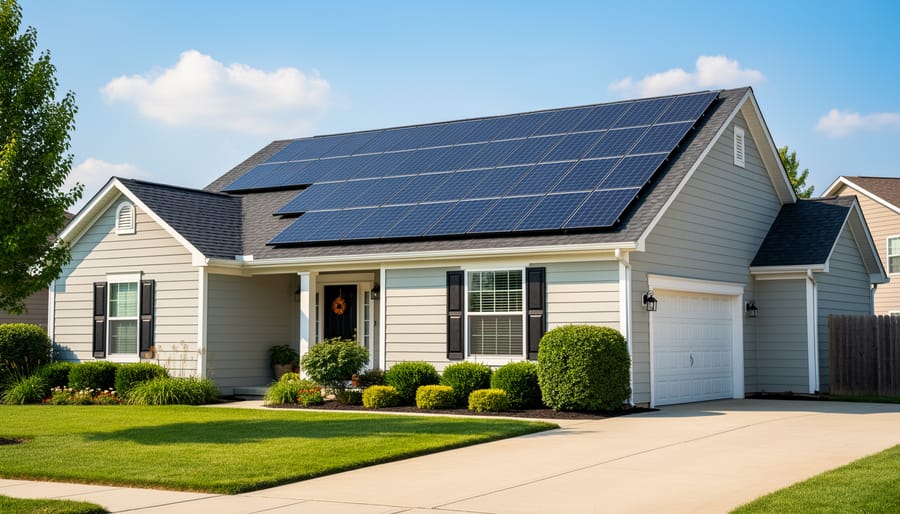
Why Solar Panels Actually Increase Your Home’s Value
What Recent Market Data Shows
Recent market research reveals compelling data for homeowners with solar panels. According to Zillow’s 2023 analysis, homes equipped with solar energy systems sell for approximately 4.1% more than comparable properties without solar installations. This translates to an additional $9,274 for a median-valued home in the United States.
The National Renewable Energy Laboratory found that buyers are willing to pay a premium of about $4 per watt of installed solar capacity. For a typical 6-kilowatt residential system, this represents roughly $24,000 in added property value.
Buyer preferences strongly favor solar-equipped homes. A recent survey by the National Association of Realtors indicates that 67% of homebuyers consider energy-efficient features important in their home search, with solar panels ranking among the top desired amenities. Additionally, homes with solar panels spend less time on the market, averaging 20% faster sales than traditional listings.
These statistics are particularly pronounced in states with high electricity costs and strong environmental incentives, including California, Massachusetts, and New York, where solar premiums can exceed national averages by 15-25%.
The Types of Buyers Actively Seeking Solar Homes
Understanding who wants to buy solar-equipped homes helps you position your property effectively. Two primary buyer profiles emerge in today’s market, each motivated by distinct priorities that solar panels address directly.
Eco-conscious buyers represent the first major category. These purchasers actively seek homes that align with their environmental values and sustainability goals. They view solar panels as more than an amenity—they’re a lifestyle choice. These buyers often research a home’s carbon footprint before scheduling viewings and appreciate the opportunity to reduce their environmental impact from day one. They’ll ask detailed questions about your system’s energy production, offset percentages, and environmental benefits. For this group, solar panels can be the deciding factor between similar properties.
Cost-conscious buyers form the second significant segment. These practical purchasers recognize solar panels as a financial asset that delivers measurable savings. They calculate utility cost reductions, analyze payback periods, and consider long-term home operating expenses. Rising electricity rates make this group increasingly common, especially in states with high energy costs. They appreciate that your solar system eliminates one of homeownership’s most unpredictable expenses and provides protection against future rate increases.
Millennial and Gen Z homebuyers often combine both profiles. They grew up with climate awareness while facing economic pressures that make operational savings attractive. This demographic particularly values smart home technology and energy efficiency, viewing solar installations as expected features rather than luxury additions. Many won’t consider homes without renewable energy capabilities, making your solar-equipped property especially appealing to this growing market segment.
The One Thing That Can Kill Your Solar Home Sale
Owned Systems: The Clean Transfer
If you own your solar panel system outright, you’re in the strongest position when selling your home. Fully-paid systems transfer seamlessly to the new owner with minimal paperwork, making the transaction straightforward for everyone involved.
When ownership is clear, the solar panels become a permanent fixture of the property, much like a new roof or updated kitchen. There’s no monthly lease payment to complicate the buyer’s debt-to-income ratio, and no third-party solar company requiring credit checks or transfer approvals. The buyer simply inherits the system and starts enjoying reduced electricity bills immediately.
From a value perspective, owned systems typically add to your home’s market price. Studies show that homes with purchased solar systems sell for a premium compared to similar properties without solar. Buyers recognize they’re gaining an asset that produces free electricity for decades to come, with most panels warranted for 25 years or longer.
The transfer process is refreshingly simple. You’ll provide the buyer with warranty documentation, system specifications, and maintenance records during closing. The system’s ownership automatically transfers with the property deed, and the new homeowner can register the warranties in their name with the equipment manufacturers.
Leased Systems: What You’re Up Against
If you’re selling a home with leased solar panels, you’ll face unique hurdles that owned systems simply don’t present. The biggest challenge? Your buyer must qualify for the lease transfer, which means they’ll undergo a credit check by the solar company. If they don’t meet the company’s financial requirements, the deal could fall apart—even if they’ve already secured mortgage approval.
Transfer fees present another obstacle. Many solar leasing companies charge anywhere from $150 to $500 just to process the transfer paperwork. While this might seem minor compared to the home’s value, it’s an unexpected cost that can sour negotiations, especially if buyers assume they’re inheriting a benefit rather than a financial obligation.
The lease agreement itself can also deter qualified buyers. Most solar leases run 20 to 25 years with annual payment escalators, typically 2-3% increases. When potential buyers review these terms, they’re essentially committing to decades of payments with rising costs. This long-term financial commitment can feel restrictive, particularly for buyers who value flexibility or those uncertain about their long-term plans.
You’ll also need to disclose all lease terms upfront, including monthly payments, remaining contract length, and any production guarantees. Transparency is essential, but comprehensive disclosure can sometimes overwhelm buyers unfamiliar with solar technology. The key is positioning these details within the context of energy savings and environmental benefits, helping buyers see the value beyond the contractual obligations.
How to Handle a Leased System Sale
If your solar panels are leased, you have three main pathways to simplify the sale. First, consider a lease buyout—purchasing the system outright before listing eliminates complications and makes your home more attractive to buyers. Contact your solar provider for a buyout quote, which typically equals the remaining lease payments minus any incentives.
Alternatively, you can transfer the lease to your buyer. Most solar companies allow transfers if the new homeowner meets credit requirements. Start this process early, as approval can take several weeks. Provide potential buyers with complete lease documentation upfront, including monthly payments, contract length, and maintenance terms.
Your third option involves prepaying remaining lease months, though this rarely makes financial sense unless you’re close to lease end. Whichever route you choose, transparency is essential. Disclose all lease details during negotiations and highlight the sustainability benefits buyers will enjoy—lower energy bills and reduced carbon footprint. Some buyers appreciate inheriting a proven system without upfront installation costs. Work with real estate agents experienced in solar transactions, as they can effectively communicate these advantages and navigate buyer concerns about assuming lease obligations.

Essential Documents Buyers Will Demand
Performance and Warranty Records
Comprehensive documentation separates a well-maintained solar installation from a questionable investment in buyers’ eyes. Start by gathering your system’s monitoring data, which tracks daily, monthly, and annual electricity production. Most modern systems include app-based monitoring that generates reports showing how consistently your panels have delivered on their promised output. This historical production data demonstrates real-world value rather than theoretical estimates.
Your solar installer should have provided warranty documentation covering three key components: panel performance (typically 25 years), inverter operation (10-15 years), and installation workmanship (5-10 years). Organize these documents clearly, noting what remains covered and how warranties transfer to new owners. Many manufacturers require simple online registration to activate warranty transfers, so research this process before listing your home.
Include maintenance records showing regular inspections and any repairs performed. Evidence of consistent care reassures buyers about system performance and longevity. If you’ve received professional energy audits or certifications verifying your system’s efficiency, add these to your documentation package.
Finally, compile utility bills from before and after installation, highlighting actual savings. This tangible proof transforms abstract energy claims into concrete financial benefits that resonate with prospective buyers.
Installation and Maintenance History
Complete documentation of your solar panel system’s history can significantly boost buyer confidence and potentially increase your home’s sale price. Start by gathering the original installation permits and municipal approval documents, which prove the system was installed legally and meets local building codes. These records demonstrate to potential buyers that the installation was done by the book.
Next, collect all inspection certificates and utility interconnection agreements. These documents show that your system passed required safety inspections and was properly connected to the grid. Buyers and their lenders often request these to verify the system’s legitimacy.
Maintenance records are equally important. Compile service logs, warranty information, and any repair invoices that document proper care and maintenance over the years. Regular maintenance records prove the system has been well-maintained, helping justify its current value. Include performance data showing energy production levels, as this tangible evidence of efficiency can be a powerful selling point.
If you’ve experienced any insurance claims or warranty repairs, include those documents too. Transparency about the system’s complete history builds trust with potential buyers and streamlines the sales process.
Financial Documentation
Gathering comprehensive financial documentation proves essential when marketing your solar-equipped home. Start by compiling at least 12 months of utility bills that demonstrate actual energy savings—these tangible numbers help buyers understand the monetary benefits they’ll inherit. Compare pre-solar and post-solar bills if available, as this before-and-after perspective powerfully illustrates the system’s value.
Organize all paperwork related to federal tax credits, state rebates, and local incentives you received during installation. While these benefits typically aren’t transferable, they establish the system’s quality and your investment level. If buyers qualify for new incentives on the existing system, document those opportunities clearly.
For leased or financed systems, prepare detailed agreements showing payment terms, buyout options, and transfer procedures. Buyers need transparency about ongoing obligations before making offers. Include warranty documentation covering panels, inverters, and installation workmanship—these transferable guarantees add significant appeal.
Production monitoring reports from your solar app provide data-driven proof of system performance. This documentation package transforms your solar installation from an abstract feature into a quantifiable asset that justifies your asking price and accelerates buyer confidence.
How to Market Your Solar Panels to Maximum Effect
Calculate and Showcase Real Savings
Nothing sells potential buyers on solar panels quite like showing them actual dollar savings. Gather your utility bills from the 12 months before solar installation and compare them with your most recent year’s bills. This before-and-after comparison creates compelling evidence that resonates with budget-conscious buyers.
Create a simple one-page summary displaying monthly savings in an easy-to-read format. For example, if your pre-solar electric bills averaged $180 monthly and now average $25, that’s $155 in monthly savings or $1,860 annually. Include seasonal variations too, as summer cooling costs often show the most dramatic reductions.
Consider preparing a visual chart or graph that illustrates these savings over time. Many homeowners report that showing a year’s worth of $15-30 electric bills compared to previous $150-200 bills creates an immediate “wow” moment during showings.
Don’t forget to highlight any additional benefits like net metering credits or renewable energy incentives you’ve received. If your system occasionally generates surplus energy that credits your account, document this as well. These concrete numbers transform solar panels from an abstract eco-friendly feature into a proven financial asset that protects buyers from rising energy costs while supporting their sustainability goals.
Address Buyer Questions Before They Ask
The best defense against buyer hesitation is preparation. Create a comprehensive solar information packet that you can share with prospective buyers during the first showing. This packet should include your system’s specifications, warranty documentation, installation date, and maintenance records. Include monthly and annual energy production data to demonstrate actual savings—real numbers resonate far more than vague promises about lower utility bills.
Add a simple one-page summary highlighting the financial benefits your household has experienced. Did you eliminate your electric bill entirely during summer months? Has your utility cost dropped by 60%? Quantify these savings in dollar amounts. Tech-savvy buyers especially appreciate seeing concrete data and performance metrics.
If you have a lease or PPA, include transfer instructions and contact information for the solar company. Clarify any obligations upfront to prevent surprises during negotiations. For owned systems, provide proof of ownership and highlight that the equipment transfers with zero ongoing payments.
Consider addressing common concerns directly in your listing materials. Create a FAQ document covering topics like roof warranty compatibility, insurance implications, and what happens if panels need repair. This proactive transparency builds trust and positions you as a knowledgeable, helpful seller rather than someone hiding potential complications.
Photography and Listing Language That Works
Quality visuals make all the difference when showcasing solar panels. Schedule photography during mid-morning or late afternoon when soft, natural light highlights the panels without creating harsh glare. Capture wide-angle shots showing the entire roofline to demonstrate professional installation, then include close-ups that reveal the sleek, modern appearance of the panels. Drone footage can be particularly effective for larger installations, providing an impressive aerial perspective that emphasizes your home’s commitment to clean energy.
Your listing description should lead with tangible benefits rather than technical specifications. Instead of simply stating “8kW solar system installed,” highlight what that means for buyers: “Enjoy dramatically reduced electricity bills with a professionally installed solar system that’s already generated $3,200 in savings over two years.” Include specific numbers like average monthly energy production, utility bill reductions, and remaining warranty coverage.
Use language that resonates emotionally with environmentally-conscious buyers while emphasizing practical advantages. Phrases like “energy-independent living,” “future-proof your home,” and “join the clean energy movement” appeal to sustainability values. Always mention if the system is owned outright rather than leased, and prominently feature any transferable warranties or maintenance agreements. Transparency about system performance and ownership status builds buyer confidence from the first impression.
Common Roadblocks and How to Clear Them
When the Appraisal Doesn’t Reflect Solar Value
Sometimes appraisers undervalue solar installations simply because they lack experience with renewable energy systems. If your appraisal comes in lower than expected, don’t panic. Start by requesting a reconsideration of value and provide your appraiser with documented comparable sales of solar-equipped homes in your area. Your solar installer or local solar advocacy groups often maintain databases of these comps specifically for this purpose.
Present clear documentation showing your system’s age, production capacity, warranty details, and monthly savings. Energy bills demonstrating reduced costs over the past year provide concrete evidence of value. If the appraiser still struggles to account for your panels, consider hiring a specialized green appraiser who understands renewable energy assets.
Many homeowners have successfully challenged low appraisals by educating appraisers about their system’s financial benefits. One California seller increased their home’s appraised value by $15,000 after providing utility savings data and three comparable solar home sales within a two-mile radius. Being proactive and prepared with documentation makes all the difference in ensuring your solar investment receives proper recognition in your home’s valuation.
Dealing with Buyer Lender Requirements
Solar panels can influence a buyer’s financing options, so understanding lender requirements upfront helps prevent last-minute complications. Many mortgage lenders require confirmation that solar panels are owned outright rather than leased, as leases can complicate the loan approval process. If your system is financed through a loan, you’ll need to provide documentation showing the lien will be satisfied at closing or transferred to the buyer with their consent.
Prepare a complete solar documentation package for potential buyers and their lenders. This should include your original purchase agreement, proof of ownership, warranty information, system specifications, recent production data, and any transferable tax credit documentation. FHA and VA loans have specific requirements regarding solar installations, including verification that panels don’t compromise roof integrity and that any liens are properly handled.
Conventional lenders typically want to see evidence that the solar system adds value to the property and won’t create repayment risks. Working with experienced real estate agents familiar with solar transactions can streamline communication with buyers’ lenders and help address concerns before they derail the sale.
Roof Age and Condition Concerns
Potential buyers often worry about roof maintenance when solar panels are already installed, and addressing this concern upfront can prevent deal-breakers. If your roof is older, consider getting a professional inspection before listing to demonstrate its condition. Most solar panels last 25-30 years, so having them installed on a roof nearing replacement age creates complications.
Be transparent about your roof’s age in disclosure documents. If it’s relatively new, emphasize this as a selling point—the buyer won’t need to worry about the costly process of removing panels, replacing shingles, and reinstalling the system. Some homeowners have successfully obtained roof certifications from contractors stating the roof has 15-20 years of remaining life, which provides buyer confidence.
If roof replacement is imminent, you have two options: complete the work before selling or adjust your asking price accordingly. Many solar installers offer panel removal and reinstallation services, though this typically costs several thousand dollars. Providing buyers with written estimates for this work demonstrates honesty and helps them budget appropriately, turning a potential objection into a manageable planning conversation.
Before You List: A Quick Solar System Checkup
Professional Inspection and Cleaning
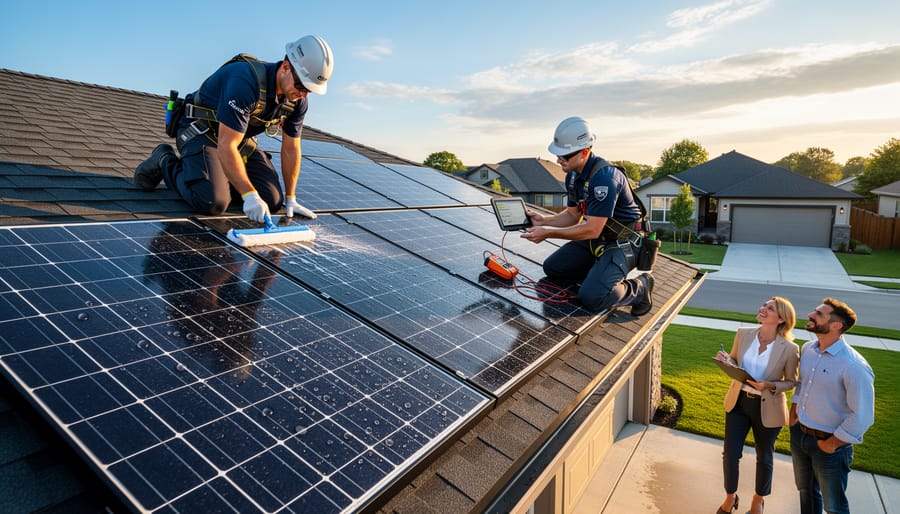
Before listing your home, invest in a pre-sale solar panel inspection to demonstrate system reliability to potential buyers. A certified technician can verify that panels are functioning at optimal capacity, identify any maintenance needs, and provide documentation that reassures buyers about their investment. This proactive step eliminates concerns about hidden issues and strengthens your negotiating position.
Equally important is ensuring panels are visually appealing through professional cleaning. Dust, pollen, and debris accumulation can reduce both efficiency and curb appeal. Clean panels signal to buyers that you’ve prioritized solar panel maintenance, making the system more attractive. Many sellers report that spotless panels photograph better in listings and create positive first impressions during showings. Consider scheduling cleaning shortly before photography and open houses to maximize visual impact while demonstrating the system’s value as a well-maintained home feature.
Minor Repairs Worth Making
Address minor issues before listing to keep buyer focus on your home’s solar benefits rather than repair concerns. Start by ensuring all solar panel monitoring systems display correctly and inverters show normal operation—buyers often check these during walkthroughs. Clean panels thoroughly to maximize their visual appeal and demonstrate peak performance capability.
Check roof condition around panel mounting points. While major roof work isn’t necessary, replace any obviously damaged shingles and seal minor gaps that might raise red flags during inspections. Organize all solar documentation into a clear folder, including warranties, installation permits, production data, and maintenance records.
Test your home’s electrical panel to confirm proper labeling of solar circuits. Electricians can quickly add missing labels for under $100, preventing confusion during buyer inspections. Finally, trim tree branches that cast shadows on panels—this simple fix demonstrates the system’s full production potential and shows you’ve maintained optimal conditions for energy generation.
When approached strategically, solar panels are a powerful asset that can set your home apart in today’s competitive real estate market. Rather than viewing them as a complication, savvy sellers recognize that an energy-efficient home with lower utility costs appeals to the growing number of environmentally-conscious buyers actively seeking sustainable properties.
The key to maximizing this advantage lies in preparation. By gathering your documentation early—including installation records, warranty information, utility savings data, and lease or loan agreements—you’ll demonstrate transparency and professionalism that builds buyer confidence. This proactive approach eliminates uncertainty and streamlines the transaction process, making your property more attractive than comparable homes without such thorough preparation.
Remember that buyer concerns about solar panels typically stem from a lack of information rather than the technology itself. When you present clear data showing annual energy savings, simplified lease transfer procedures, and remaining warranty coverage, you transform potential objections into selling points. Many homeowners who’ve successfully sold solar-equipped properties report that their panels attracted serious, qualified buyers who valued long-term savings and environmental responsibility.
As you prepare to list your home, view your solar installation as the competitive differentiator it truly is. In an era where sustainability matters more than ever to homebuyers, your investment in renewable energy positions your property as forward-thinking and cost-effective. Start organizing your solar documentation today, and you’ll be ready to showcase this valuable feature with confidence when the right buyer comes along.


Battery Tender Solar Battery Charger Review: Off-Grid Maintenance That Actually Works in 2026
Document your solar panel system completely before listing, including warranties, installation certificates, performance data, and financing agreements. Buyers and their lenders will scrutinize these details, and <a href="https://propertysaviour.co.uk/">Property Saviour</a> research shows homes with organized solar documentation sell 15% faster than those requiring buyers to chase paperwork. Understand your ownership structure immediately. Owned systems typically add 3-4% to home values and transfer smoothly at closing. Leased panels require buyer assumption of your agreement, which complicates financing since many mortgage lenders ...