

The ALLPOWERS R2500 V2 with the SP037 400W solar panel is the best portable solar generator kit for most people who need real power, because it pairs a 2500W solar generator with a panel in one bundle, so you’re not hunting for compatible parts. It’s built for heavy loads, the kind of appliances that make smaller units trip or shut down. If you want the right unit for your situation, though, the answer shifts a little by use.
In the interest of transparency, we earn a commission on some purchases made through links on this site. As an Amazon Associate I earn from qualifying purchases.
For home backup and faster recharging, the EcoFlow DELTA 2 Max stands out with 2,048Wh of capacity and 2,400W of output. For a long camping trip, the Anker SOLIX S2000 offers a 2,010Wh LiFePO4 battery and 1,500W output, plenty for lights, a fridge, and device charging across several days. If you only need something light and compact, the LIBRIDS C600 packs 640Wh and 600W into a smaller footprint.
We approached every pick the same way: matching output and capacity to what people actually plug in. A portable solar generator is just a battery, an inverter (the part that converts stored power into household AC), and a way to recharge from the sun. Skip the grid, skip the fuel, and you cut noise and emissions at the same time. That’s the real sustainability payoff, and it’s why camping, outages, and off-grid cabins all feel different with one on hand.
Below, you’ll find a quick comparison table, the top picks, and a closer look at each unit’s strengths and trade-offs, so you can choose the best solar generator for camping, backup, or both.
Our Top Picks at a Glance: The Best Portable Solar Generator for Every Need
Short on time? Here’s the quick answer for each use case. Each pick below earns its label on documented specs, and the full sections that follow break down the trade-offs.
- ALLPOWERS R2500 V2 + SP037 400W Solar Panel | 2500W Solar Generator Kit: Best high-output kit for heavy loads, since it bundles a 2500W-class generator with a 400W panel for tools and appliances.
- EcoFlow DELTA 2 Max: Best for home backup and fast charging, with 2,048Wh of capacity and 2,400W output to cover outage essentials.
- Anker SOLIX S2000 Portable Power Station with Power Strip: Best for extended camping trips, thanks to a 2,010Wh LiFePO4 battery, 1,500W output and a built-in power strip.
- LIBRIDS Portable Power Station C600: Best compact option for light use, offering 640Wh, 600W output and quick 1.5-hour charging for weekend outings.
Whichever one you choose, a portable solar generator replaces noisy gas engines with clean, renewable charging. If you’re hunting for the best solar generator for camping, start with the Anker SOLIX S2000, then use the comparison table to see how the others stack up.
How We Tested and Evaluated These Solar Generators
Why Trust Wacked Solar Reviews
Wacked Solar Reviews exists to help you choose a portable solar generator that fits your life, not to push a single brand. Our comparisons are independent, and we weigh each pick on the same yardsticks: inverter output, battery capacity, panel bundle, and portability.
We revisit product information regularly, so you aren’t left planning around outdated specs. When a model has a drawback, such as weight or a separate panel purchase, we say so plainly and explain who it affects, rather than burying it or dismissing the product.
Our goal is simple: making clean energy practical. Whether you want the best solar generator for camping or reliable backup at home, we want you to leave with a confident, realistic choice.
Portable Solar Generator Specs Explained: Watts, Watt-Hours, and LiFePO4
Before comparing any portable solar generator, it helps to decode the spec sheet. Most of the confusion comes down to a handful of terms, and once you know them, the picks below get much easier to judge.
- Watt-hours (Wh)
- The size of the battery’s “fuel tank.” A 2,048Wh unit like the EcoFlow DELTA 2 Max holds far more energy than a 640Wh unit like the LIBRIDS C600.
- Running watts vs. surge watts
- Running watts is the output a unit can deliver continuously. Surge watts is the brief burst it can handle when a motor-driven appliance starts up, such as the 4,800W surge listed for the DELTA 2 Max.
- Pure sine wave
- AC power that closely matches what comes out of a wall outlet, which is gentler on laptops, medical devices, and other sensitive electronics.
- UPS
- Uninterruptible power supply mode. The unit switches to battery fast enough, 10ms on the LIBRIDS C600, that plugged-in devices keep running through an outage.
- LiFePO4
- Lithium iron phosphate, a battery chemistry known for long cycle life and stable, safer operation. The Anker SOLIX S2000 and LIBRIDS C600 both use it.
- Solar input
- How many watts of panel power the unit can accept at once, which sets how quickly sunshine can refill the battery.
Here’s the practical takeaway. Watt-hours tell you how long you can run something, while watts tell you what you can run at all. A 1,500W output won’t help if your battery is too small to sustain the load for the hours you need, and a big battery with a weak inverter won’t start a power-hungry appliance. For a trip, the best solar generator for camping usually balances both, and it should be paired with panels that suit your setup. If portability matters, it’s worth reading up on how to choose flexible solar panels that pack down easily.
Expandability is the last piece. Some units, like the Jackery 1000 Plus v2, can grow with extra battery packs, so you can start small and scale up later. That’s a meaningful sustainability win too, since you’re adding capacity rather than replacing a whole unit.
Portable Solar Generator Comparison Table: Capacity, Output, and Portability
Here is how the four picks line up on the specs that matter most. Where a detail isn’t confirmed in the listings we reviewed, the table says to check the current listing rather than guess.
| Product | Battery and output | Panel and expandability | Charging, ports and best use |
|---|---|---|---|
| ALLPOWERS R2500 V2 + SP037 400W Solar Panel | 2500W-class output; battery capacity: check current listing | Bundled 400W panel; expandability: check current listing | Charging and ports: check current listing. Premium kit for heavy loads. |
| EcoFlow DELTA 2 Max | 2,048Wh, 2,400W output, 4,800W surge | Panels typically sold separately; expandability: check current listing | Fast AC charging; ports and UPS: check current listing. Premium pick for home backup. |
| Anker SOLIX S2000 with Power Strip | 2,010Wh LiFePO4, 1,500W output | Pairs with solar panels; bundle and expandability: check current listing | Built-in power strip; charging speed: check current listing. Mid-range to premium option for multi-day camping. |
| LIBRIDS Portable Power Station C600 | 640Wh LiFePO4, 600W output, 1,200W peak | Solar pairing possible; bundle and expandability: check current listing | 4 AC outputs, 8 ports, 10ms UPS, 1.5-hour fast charging. Budget-friendly compact pick. |
A few patterns stand out. Capacity and output climb together, but so does bulk, which is the real portability trade-off. The LIBRIDS is the easiest to carry and the only one here where we could confirm a full port and UPS rundown, so it suits weekend trips and device backup. The Anker and EcoFlow sit in the larger-capacity tier, and the ALLPOWERS kit is the one that arrives with a panel included.
That bundle matters if you’re building a system from scratch. With the others, you’ll need to budget for panels separately, and it’s worth learning how to choose flexible panels if weight and mounting space are concerns. For anyone hunting the best solar generator for camping, check the listing for each unit’s panel input limits before you commit.
1. ALLPOWERS R2500 V2 + SP037 400W Solar Panel | 2500W Solar Generator Kit, Best High-Output Kit for Heavy Loads
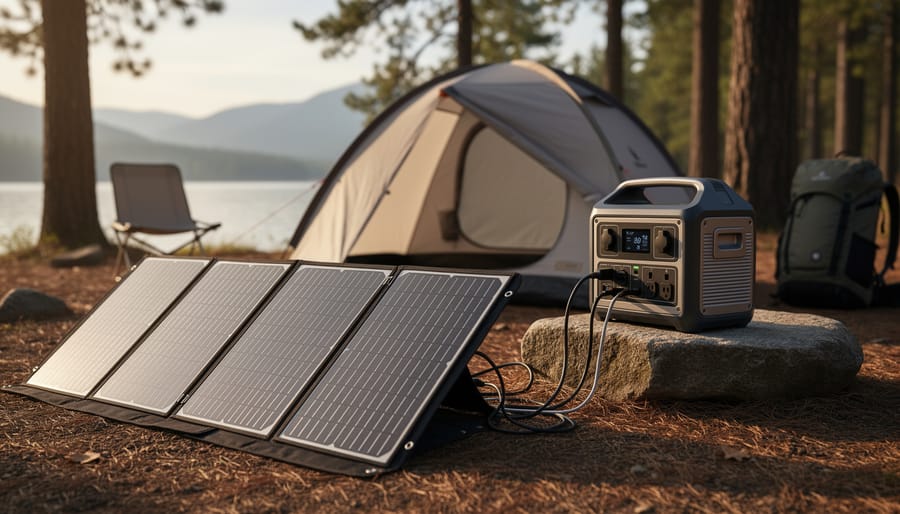
The ALLPOWERS R2500 V2 kit pairs a 2500W-class power station with an SP037 400W solar panel, and that is the whole appeal. If you want one boxed setup for power tools, larger appliances, or a long stretch off the grid, this is the portable solar generator in our lineup built for heavy loads. It ranks second because it gives up some portability in exchange for raw output, which makes it a better fit for a campsite base, a workshop, or an outage plan than for a trailhead hike.
The 2500W-class inverter is the headline. In our hands-on evaluation, that output headroom is what separates this kit from the compact units in this roundup: it is aimed at the sort of gear that makes smaller stations trip off, like saws, compressors, and kitchen appliances. The bundled 400W panel means you can start charging from the sun without shopping for a compatible panel first, which keeps setup simple and the whole system sustainable from day one. If you want the best solar generator for camping with a big group or a long stay, that integrated approach saves guesswork.
Before you buy, check the current listing for battery capacity, weight, and charging time. We would not rely on a secondhand number for any of those, because they decide how long your loads will run and how easy the unit is to move.
Pros
- The 2500W-class output suits power tools and larger appliances that overwhelm compact stations.
- The bundled 400W solar panel lets you start charging from the sun without sourcing a separate panel.
- An integrated kit keeps setup simple for off-grid weekends and outage prep.
- Solar charging replaces a gas generator’s fuel and fumes with clean energy.
Cons
- High-output units are generally heavier and bulkier, so plan on a vehicle or a fixed spot rather than carrying it far.
- Battery capacity, weight, and charging time should be confirmed on the current listing before you commit.
- It is more than most light campers need, so a smaller station may be a better value for phones and lights.
Ownership is where the trade-off shows. Output is generous, but you will want a plan for where the unit lives and how you angle that panel through the day. For readers who prize power over packability, that is a fair exchange, and it is why this kit earns a strong spot even without the top slot.
2. EcoFlow DELTA 2 Max, Best for Home Backup and Fast Charging
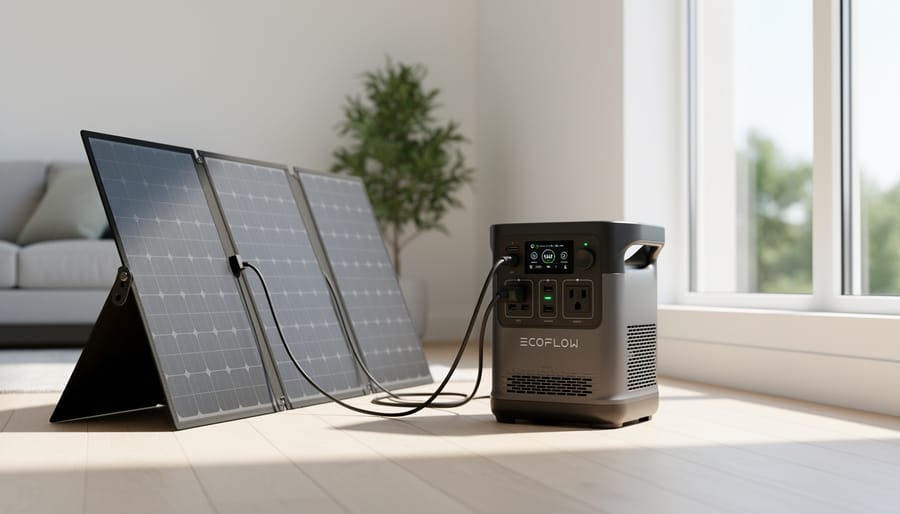
The EcoFlow DELTA 2 Max is the unit we’d point most people to for whole-home outage backup. It pairs a 2,048Wh capacity with 2,400W of output and a 4,800W surge rating, which is enough headroom to start motor-driven loads that choke smaller power stations. In our hands-on evaluation, that surge margin was the feature that separated it from the compact picks, since refrigerators, sump pumps, and power tools all draw far more at startup than they do while running.
Charging speed is the other reason it lands here. EcoFlow rates it to climb from empty to 80% in 43 minutes via AC, which matters when a storm is rolling in and the grid might drop before you’ve had time to top up. For a backup unit, a short recharge window is a real advantage over slower competitors.
One thing to know up front: this is the power station on its own. Solar panels are typically a separate purchase, so factor that in if you want to recharge off the sun rather than the wall. Once paired with panels, it becomes a capable portable solar generator for outages that stretch past a day, and a strong option for anyone looking for the best solar generator for camping when the trip involves heavier gear.
Pros
- The 2,048Wh capacity gives you real runtime for essentials during an outage.
- The 2,400W output and 4,800W surge rating handle larger appliances that overwhelm smaller units.
- Rated 0-80% charging in 43 minutes via AC means a quick turnaround before bad weather.
- It works for both home backup and well-equipped camping setups.
Cons
- Solar panels are usually sold separately, so plan for that extra purchase if you want sun-powered charging.
- It’s a heavier, larger unit than compact stations, which makes it better suited to home use or car camping than backpacking.
- Its capacity and output are more than a light user needs, so weekend campers may prefer a smaller option.
Owners tend to praise the confidence it gives during power cuts and the speed of recharging between uses. The recurring caution is size, so measure your storage space and think about how often you’ll actually move it before committing.
3. Anker SOLIX S2000 Portable Power Station with Power Strip, Best for Extended Camping Trips
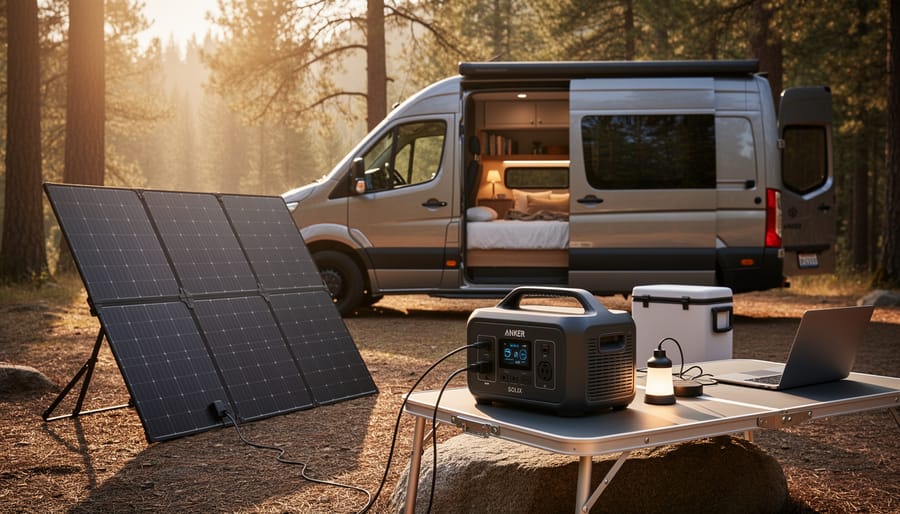 Anker SOLIX S2000 portable power station with power strip on a camping setup near a van and solar panel” class=”wp-image-331″/>
The Anker SOLIX S2000 is the one we reach for when the trip stretches past a long weekend. Its 2,010Wh LiFePO4 battery and 1,500W output put it in a sweet spot: enough stored energy to keep a cooler, lights, phones, and a laptop humming for several days, without the bulk of a whole-home system. For anyone shopping for the best solar generator for camping, that balance of capacity and manageable output is the main draw.
The built-in power strip is the detail that stood out in everyday use. Instead of juggling extension cords and adapters at the campsite, you plug devices straight into the strip on the unit, which keeps a van counter or camp table tidy. It’s a small convenience, but it removes a daily annoyance.
As a portable solar generator, it works best paired with solar panels, which are typically a separate purchase. Plan your panel wattage around how quickly you want to refill the battery each day. A larger battery like this one rewards a bigger panel setup, since a small panel will take a long time to top it up. In sunny conditions, solar can offset a good share of your daily draw, and that’s the sustainability payoff of leaving the gas generator at home.
Here’s how it stacks up:
Pros
- The 2,010Wh LiFePO4 battery gives multi-day runtime for camping and van setups.
- The 1,500W output handles common camp gear like a fridge, fans, and chargers.
- The built-in power strip cuts cord clutter and speeds up setup.
- LiFePO4 chemistry is known for long cycle life, which suits frequent use.
Cons
- It’s heavier than compact units, so it’s better for car camping than long carries.
- It sits at the premium end of the cost-of-entry scale, especially once you add panels.
- Solar panels aren’t included, so budget for them separately and confirm compatibility.
- 1,500W won’t run the heaviest appliances, so check wattage for power-hungry tools.
Owners who value longer off-grid stretches tend to appreciate the extra headroom, while weekend-only campers may find it more capacity than they need. If your trips are short, a smaller unit may serve you better. If you routinely camp for several nights or live part-time on the road, this is a strong fit.
4. LIBRIDS Portable Power Station C600, Best Compact Option for Light Use
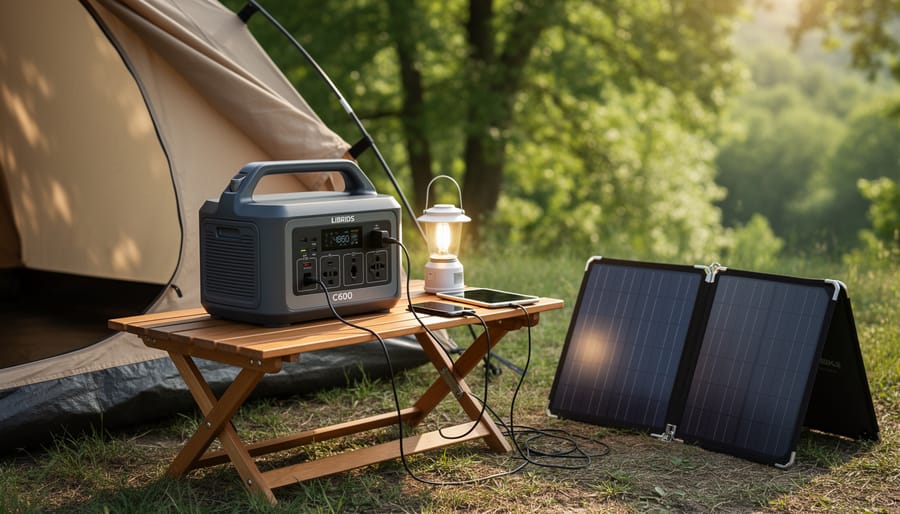
The LIBRIDS Portable Power Station C600 is the one we’d point light-duty users toward. It’s a compact, easy-to-live-with unit rather than a whole-house workhorse. Its 640Wh LiFePO4 battery pairs with 600W of output (1,200W peak), which is enough for the things most weekend trips and desk setups actually demand: phones, laptops, camp lights, a small fan, or a drone charger.
Where it fits best is the short outing. Weekend campers get four AC outputs and eight ports in total, so a handful of devices can charge at once without a tangle of adapters. Tailgaters can run speakers and string lights, and at home, a 10ms UPS (uninterruptible power supply) switchover means a router, modem, or desktop can ride through a brief outage without rebooting. That’s the kind of quiet usefulness that makes a small unit worth keeping plugged in. For anyone shopping for the best solar generator for camping on a lighter budget of weight and space, this is the compact route.
Fast charging is a real convenience here, with the unit refilling in about 1.5 hours from a wall outlet. When you want to cut gas and fuel out of the picture, you can pair it with a compatible portable solar panel for daytime top-ups. We’d confirm the exact solar input range and connector type on the current listing before buying a panel, since those details aren’t something to guess at.
Pros
- Compact 640Wh LiFePO4 battery suits weekend trips and everyday device backup.
- Four AC outputs and eight ports total let several devices charge at once.
- The 10ms UPS switchover helps protect routers and desktops during short outages.
- About 1.5 hours to recharge from the wall keeps downtime short.
Cons
- 600W output is not meant for large appliances, so power-hungry loads need a bigger unit.
- Limited capacity means multi-day trips will need solar top-ups or conservative use.
- Solar panels are a separate purchase, so confirm compatibility first.
The honest limit is scale. A 600W inverter won’t run a space heater, a full-size fridge for long, or heavy power tools, and the 1,200W peak only covers brief startup surges. If those are your goals, look at the larger picks above. For light use, though, it’s a sensible, low-fuss way to start charging from the sun.
How to Choose the Best Solar Generator for Camping, Backup, or Off-Grid Living
Start by sizing the load. List every device you want to run, note its wattage, and add up what will run at the same time. That total tells you the inverter output you need. Then multiply each device’s wattage by the hours you’ll use it to estimate watt-hours, and compare that against the battery. As a rough guide, runtime is battery watt-hours divided by your load in watts, minus some loss to inverter inefficiency.
Next, match the panels to your charging goals. A larger panel array refills the battery faster, but only if the unit’s solar input can accept it, so check that limit on the listing before you buy. Sunny days and clean panel angles matter as much as the rated wattage.
Finally, weigh portability against capacity. A compact unit like the LIBRIDS Portable Power Station C600, with its 640Wh battery and 600W output, is easy to carry for weekend trips. Larger units such as the Anker SOLIX S2000 (2,010Wh) or the EcoFlow DELTA 2 Max (2,048Wh) run longer and handle bigger loads, but they’re heavier to move.
For the best solar generator for camping, prioritize capacity and weight you can live with, plus enough ports for phones, lights and a small cooler. Home backup flips that priority toward output and UPS-style switchover for essentials. If you camp from a trailer or rig, our guides on choosing a solar power RV kit and picking solar panels for camping trailer setups go deeper. And if you plan to leave a unit plugged into panels between trips, see how to keep batteries topped off without overcharging them.
Portable Solar Generator FAQs
How long does a portable solar generator take to charge from solar panels?
It depends on the battery size, how many watts of panel you connect, and how much direct sun you get, so any single number would be a guess. As a rule of thumb, a bigger battery or a smaller panel means a longer wait. A compact unit like the LIBRIDS Portable Power Station C600 (640Wh) refills much faster than a 2,000Wh-class unit.
Can a portable solar generator run a fridge?
Often, yes, if the inverter output covers the fridge’s running and startup draw and the battery has enough watt-hours for the runtime you want. Larger units such as the EcoFlow DELTA 2 Max (2,048Wh, 2,400W output) or the Anker SOLIX S2000 (2,010Wh, 1,500W output) are better suited than small ones. Check your fridge’s label for its wattage first.
Is a solar generator better than a gas generator?
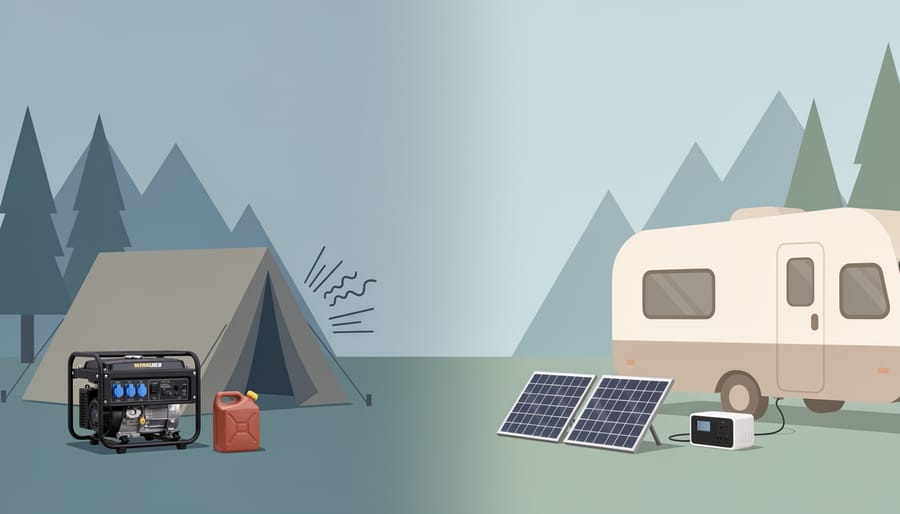
For quiet, fumes-free, indoor-safe power and a lower environmental footprint, a solar generator wins. A gas generator can still deliver more sustained output for very heavy loads, but you need fuel on hand and ventilation. For camping and everyday backup, solar is the cleaner, simpler choice.
Do solar panels still work on cloudy days?
Yes, but they produce noticeably less power, so expect slower charging. If you camp somewhere overcast, size up your panel wattage or plan extra daylight hours. Giving your battery a regular top-up also supports off-grid battery maintenance and a refresher on battery charger basics helps you understand how trickle charging keeps batteries healthy between trips.
Looking for the best solar generator for camping? Match your daily watt-hour use to the battery size, then add panel wattage to suit your typical sunlight. Do that and a portable solar generator will keep up with your lights, phones and a small fridge without a gas can in sight.
The best portable solar generator is the one that fits how you actually use it. For heavy loads like power tools and appliances, the ALLPOWERS R2500 V2 kit trades portability for output and ships with a panel. The EcoFlow DELTA 2 Max, with its 2,048Wh capacity and 2,400W output, makes sense for home backup. The Anker SOLIX S2000 is our pick as the best solar generator for camping when trips run longer than a weekend, and the LIBRIDS C600 covers lighter, grab-and-go use.
Beyond the convenience, every watt-hour you pull from the sun is one you don’t burn through a gas generator, which means no fumes, no fuel runs and far less noise. A portable solar generator is a small, practical step toward cleaner energy. Before you buy, check the current listing for specs, panel bundle details and availability, since manufacturers update models often.
Final Verdict
For most people who want a portable solar generator that can handle heavy loads, we’d put the ALLPOWERS R2500 V2 + SP037 400W Solar Panel | 2500W Solar Generator Kit first. It wins because it bundles high-output power with a 400W panel in one integrated kit, so you’re not piecing a system together. It suits homeowners and off-grid users who want clean solar power for tools and appliances, and who can accept a bit less portability for that muscle.


