

Choosing the right solar panels for your camping trailer means matching power output to your electrical needs, selecting a panel format that fits your trailer’s roof or storage space, and ensuring compatibility with your battery system. Most weekend campers need between 200 and 400 watts of solar capacity to run LED lights, charge devices, and power a small refrigerator, while extended off-grid trips may require 600 watts or more. The key decision comes down to three panel types: portable panels that fold up for easy storage, flexible panels that mount directly to curved trailer surfaces, and rigid monocrystalline panels that offer the best efficiency per square foot.
In the interest of transparency, we earn a commission on some purchases made through links on this site. As an Amazon Associate I earn from qualifying purchases.
The challenge isn’t just picking panels with enough wattage. You need to consider weight limits on your trailer roof, shade tolerance when parked under trees, and whether you want the flexibility to angle panels toward the sun throughout the day. A 200-watt portable setup like the Renogy 200W Portable Solar Panel gives you positioning freedom and quick setup, perfect for boondockers who move frequently. Permanent installations using options like the BougeRV Arch Pro 200W Anti-Shading N-Type Fiberglass Flexible Solar or ECO-WORTHY 200 Watts 12 Volt/24 Volt Solar Panel Kit work better for full-time travelers who prioritize a low-profile build and hands-off operation.
Getting this decision right the first time saves you from costly upgrades down the road. This guide walks through the technical factors that actually matter, compares the real-world performance differences between panel types, and highlights products proven to handle the vibration, temperature swings, and weather exposure that come with mobile solar installations.
What to Look for When Buying Solar Panels for Camping Trailers
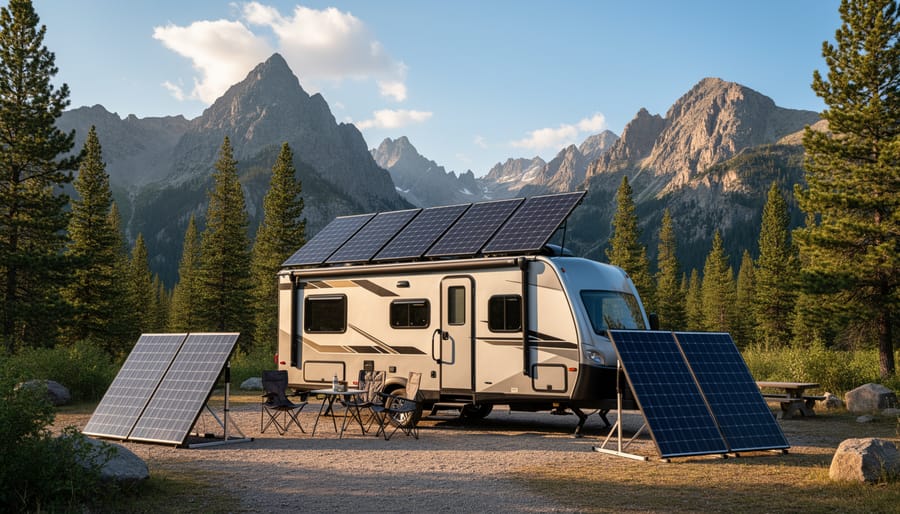
Start by calculating your trailer’s daily power consumption before choosing a panel. List every device you’ll run, multiply its wattage by hours of daily use, then add 20% headroom for cloudy days and inefficiency. A small camping trailer with LED lights, a phone charger, and a portable fridge might need 300-400 watt-hours daily, while a larger setup with multiple appliances could demand 1,000+ watt-hours. This number determines whether you need a single 100-watt panel or a multi-panel array.
Panel type dramatically affects installation and usability. Rigid panels mount permanently to flat surfaces, delivering the highest efficiency and lasting 25+ years, but they add height and require drilling into your trailer roof. Flexible panels bend up to 240 degrees, conforming to curved surfaces without penetrating the roof seal, though they typically cost more per watt and may have shorter lifespans due to heat buildup against the mounting surface. Portable folding panels eliminate installation entirely, letting you position them for optimal sun exposure while your trailer sits in shade, but you must set them up and store them at each campsite. Consider whether you prioritize convenience, roof space, or installation simplicity based on how you actually camp.
Efficiency ratings between 20-25% matter more than most buyers realize. A 200-watt panel at 25% efficiency produces the same power as a 200-watt panel at 20% efficiency, but the higher-efficiency panel occupies less roof space. This becomes critical on smaller camping trailers where every square foot counts. Monocrystalline cells consistently outperform polycrystalline in both efficiency and low-light conditions, making them worth the modest price premium for serious off-gridders.
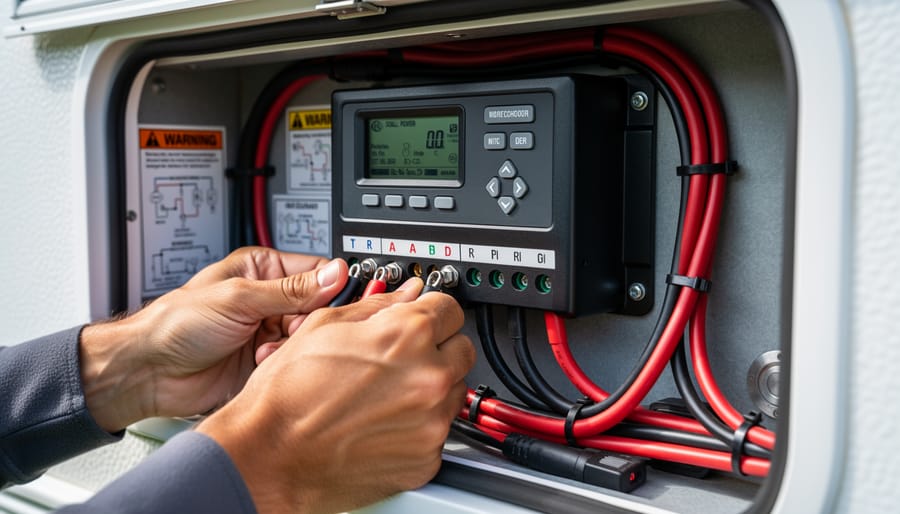
Charge controller compatibility separates successful installations from frustrating ones. Your panel voltage must match your battery bank voltage, typically 12V for camping trailers, and your controller must handle the panel’s maximum current. Understanding MPPT vs PWM controller technology helps here: MPPT controllers cost more but extract 20-30% more power from your panels, especially valuable during marginal sun conditions. If you’re building a complete system rather than adding panels to existing equipment, consider a solar power RV kit that bundles matched components.
Weight and mounting hardware deserve attention beyond just panel specs. A 200-watt rigid panel weighs 25-35 pounds, while flexible versions drop to 5-8 pounds. Check your trailer’s roof load capacity and whether you’re mounting directly to fiberglass, aluminum, or a roof rack. Quality mounting brackets with sealed cable entry points prevent water intrusion that destroys interiors.
Types of Solar Panels for RV and Camping Trailer Use
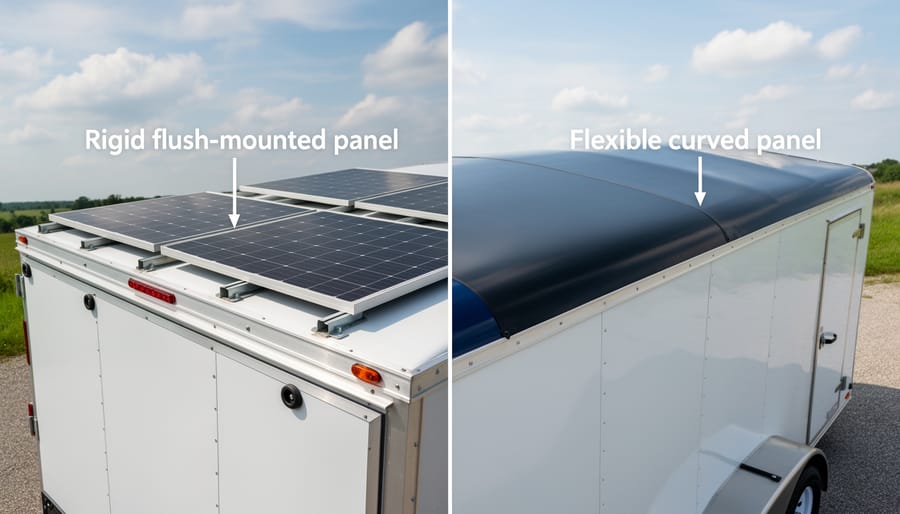
Camping trailer owners have three main panel categories to choose from, each designed for different setups and travel habits.
Portable folding panels are self-contained units that unfold like a suitcase and sit on the ground near your trailer. They typically come with built-in kickstands and a charge controller, ready to plug directly into your battery bank or power station. The standout advantage is flexibility: you can park in the shade and position the panels in full sun, adjusting their angle throughout the day for maximum output. They’re also easy to store inside your trailer when driving. The downside is you’ll need to set them up and take them down at each stop, and they require secure storage to prevent theft at campgrounds.
Rigid mounted panels are the permanent rooftop solution most people picture when they think of RV solar. These aluminum-framed panels bolt directly to your trailer’s roof and stay put while you drive. They deliver consistent power without any daily setup, making them ideal if you camp frequently or live full-time in your trailer. The trade-off is you’re limited to whatever sunlight hits your roof, so parking in shade eliminates your charging capacity. Installation requires drilling into your roof and proper sealing to prevent leaks, though the process is straightforward for anyone comfortable with basic tools.
Flexible solar panels split the difference between portability and permanent mounting. These thin-film panels can bend to conform to curved trailer roofs and weigh considerably less than rigid panels, which matters if you’re watching payload limits. They’re easier to install since many use adhesive backing rather than requiring penetrations through your roof. However, they typically cost more per watt than rigid panels, run slightly hotter which can reduce efficiency, and may not last as long in harsh conditions. They shine when you have a curved Airstream-style roof or want a low-profile installation.
| Panel Type | Best Use Case | Installation Difficulty | Portability |
|---|---|---|---|
| Portable Folding | Weekend campers who move frequently | None (plug and play) | High |
| Rigid Mounted | Full-timers and frequent travelers | Moderate (roof penetrations required) | None |
| Flexible Mounted | Curved roofs or weight-conscious setups | Low (adhesive or minimal fasteners) | None |
Your camping style should drive your decision. If you take short weekend trips and value the ability to chase the sun, portables make sense. Full-timers who stay put for weeks benefit more from the set-it-and-forget-it nature of roof-mounted systems. Those with unique trailer shapes or strict weight limits will appreciate what flexible panels offer, despite the premium price.
Renogy 200W Portable Solar Panel
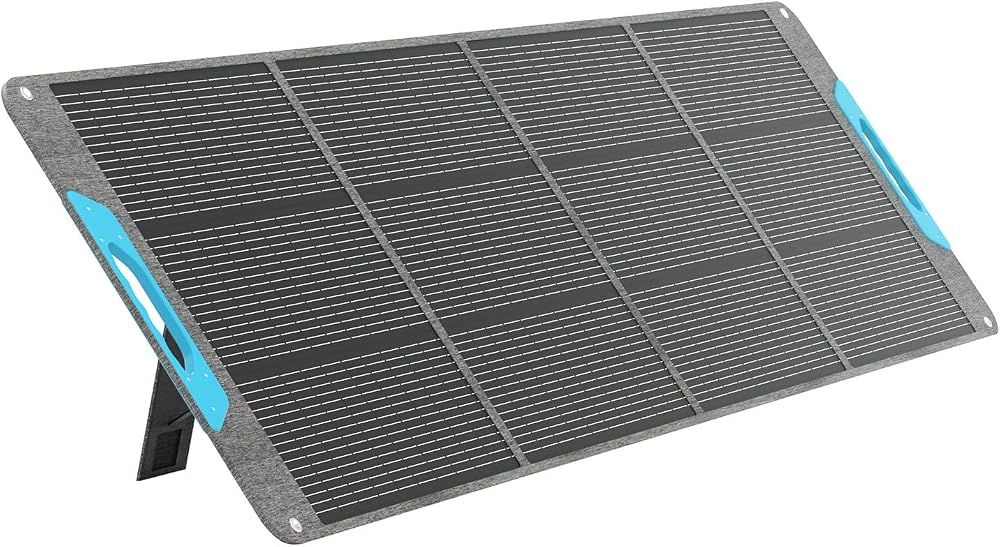
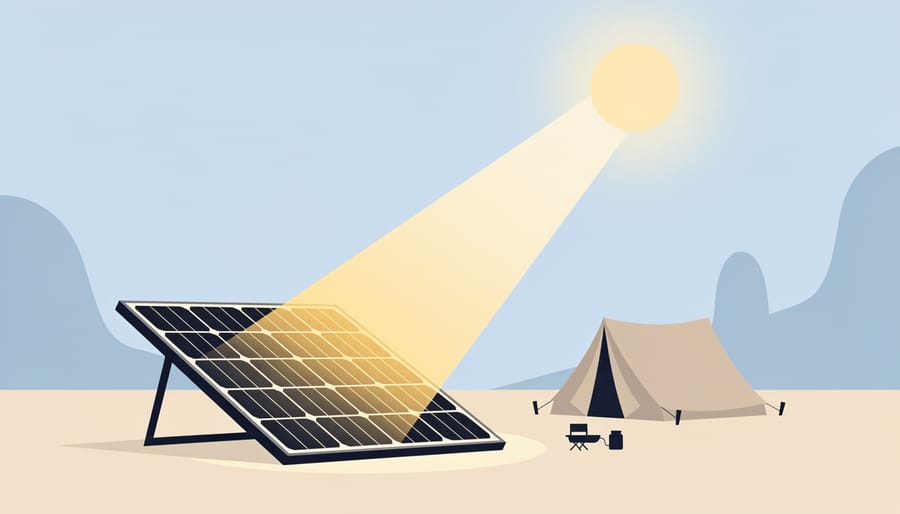
The Renogy 200W portable panel stands out as a grab-and-go option for camping trailer owners who want quick setup without roof mounting. This folding suitcase design collapses for storage and deploys in minutes, making it ideal for weekend trips or when you move your trailer between sunny and shaded sites throughout the day.
The 25% efficiency rating puts this panel in the upper tier for portable units, meaning you capture more power per square foot than budget alternatives. In practical terms, you can fully recharge a mid-sized power station during a full sun afternoon or keep essential trailer systems topped off while you’re parked at a festival or boondocking site. The panel works with most common power stations through standard connectors, though you’ll want to verify your specific model’s compatibility before buying.
Users report that real-world output often meets expectations in clear conditions, which isn’t always the case with portable panels. The kickstand legs adjust to multiple angles so you can chase the sun without moving your entire trailer, and the carrying handle makes repositioning easy. One common observation is that the unit weighs enough to feel substantial but not so heavy that dragging it from storage becomes a chore.
The sustainability angle matters here beyond just clean energy. Because you avoid drilling into your trailer roof, you preserve the resale value and weatherproofing of your rig. The panel itself is built to last multiple camping seasons if you store it properly between trips. With 4.5 out of 5 stars from 984 customer ratings, the feedback suggests most buyers find it reliable for supplemental or primary trailer power depending on their consumption habits.
Where this panel fits best is when you want the flexibility to use solar at camp but don’t need permanent installation, or when you’re testing solar before committing to a fixed system on your trailer.
BougeRV Arch Pro 200W Anti-Shading N-Type Fiberglass Flexible Solar

The BougeRV Arch Pro 200W flexible panel stands out for camping trailers with curved or irregular roof surfaces where rigid panels simply won’t conform. Its fiberglass construction wraps around contours that would crack standard aluminum-backed panels, and the anti-shading technology keeps power flowing even when part of the panel falls under tree shadow or awning shade, a common frustration at wooded campsites.
N-Type solar cells deliver a meaningful edge over conventional P-Type designs. They resist performance degradation in high heat, which matters when a black panel bakes on a metal trailer roof in summer sun, and they maintain efficiency longer over the panel’s lifespan. The bifacial cell structure captures reflected light from the trailer roof surface beneath, squeezing out extra watts that most flexible panels miss.
Installation requires only adhesive mounting or grommeted tie-downs rather than roof penetrations and bulky racking hardware. You can lay the panel along ridges, over vent covers, or across compound curves that would force compromises with rigid mounts. The flexibility comes with trade-offs: adhesive bonds can fail in extreme heat cycles, and the panel’s thin profile offers less protection against hail or heavy branch impacts compared to tempered glass alternatives.
Customer feedback from 79 reviews averaging 4.3 out of 5 highlights strong real-world performance in partial shade and easy conformability to rounded Airstream-style roofs. Users note that output holds steadier than older flexible panels when clouds pass or shadows shift, and the fiberglass backing resists the cracking issues that plagued earlier polymer-backed flex panels after a season of thermal cycling.
This panel makes sense when roof shape dictates flexibility or when you’re chasing every available watt without drilling holes. It’s less ideal if your trailer has flat roof space where rigid panels would cost less per watt and outlast flexible construction.
ECO-WORTHY 200 Watts 12 Volt/24 Volt Solar Panel Kit

The ECO-WORTHY 200 Watts 12 Volt/24 Volt Solar Panel Kit stands out as a genuinely complete solution for camping trailer owners who want everything they need in one box. This kit bundles a high-efficiency monocrystalline panel with a 30A PWM charge controller, eliminating the guesswork of matching components and saving you the hassle of sourcing compatible parts separately.
What makes this kit particularly well-suited for camping trailers is its voltage flexibility. The ability to configure the system for either 12V or 24V operation means you can adapt it to your existing trailer battery setup without replacing your entire electrical system. Most weekend camping trailers run on 12V, but if you’re operating a larger trailer with a 24V battery bank, this same panel handles both configurations. That versatility matters when you’re investing in a solar system you want to keep for years.
The monocrystalline panel delivers consistent power output even in less-than-perfect conditions, and the included PWM charge controller protects your batteries from overcharging while managing the power flow efficiently. PWM technology works well for most camping trailer applications where you’re matching panel voltage to battery voltage. While MPPT controllers squeeze out higher efficiency, they add cost and complexity that weekend campers often don’t need.
Installation proves straightforward enough for DIY-friendly trailer owners. The kit includes mounting hardware and pre-wired connections, and the controller features clearly labeled terminals. You’ll need basic tools and a few hours to mount the panel on your trailer roof, run cables through your roof entry point, and connect everything to your battery system. Many users appreciate that the learning curve stays gentle, even if this is their first solar installation.
The kit currently holds a 4.6 out of 5 rating from 1,191 customer ratings, with many reviewers highlighting the value of getting a matched system rather than piecing together individual components. Users running LED lights, water pumps, and phone chargers report that 200 watts handles their off-grid needs for extended weekend trips without draining their batteries overnight.
JJN Bifacial 425 Watt N-Type Solar Panel

The JJN Bifacial 425 Watt panel represents a step up in power generation for camping trailer owners who’ve outgrown smaller systems or run energy-intensive appliances like air conditioning, refrigerators, and multiple devices simultaneously. Unlike standard panels that capture sunlight only on the front surface, bifacial technology harvests energy from both sides, meaning reflected light bouncing off your trailer roof, gravel campsite, or nearby surfaces contributes additional charge. This dual capture can boost total output by 10 to 20 percent in the right conditions, though the actual gain depends heavily on your mounting setup and ground reflectivity.
N-Type cells deliver higher efficiency and better heat tolerance than older P-Type technology. At 25 percent efficiency, this panel converts more of the available sunlight into usable power per square foot, which matters when roof space is limited on a camping trailer. The JJN panel’s 425-watt output makes it a strong choice for larger trailers or those running demanding loads, but it also means careful consideration of weight, mounting structure, and charge controller capacity before installation.
Bifacial panels work best when mounted with an air gap underneath, allowing light to reach the rear surface. This makes them less ideal for flush mounting compared to traditional curved roof panels that conform tightly to your trailer’s contours. A tilted rack or elevated frame maximizes the bifacial advantage, though this adds wind resistance and requires secure attachment points rated for highway speeds and rough terrain.
With a 4.5 out of 5 rating from 520 customer reviews, users appreciate the panel’s power density and UL 61730 certification, which confirms it meets North American safety standards. The high wattage suits full-time campers or those who frequently boondock for extended periods, but weekend warriors with modest power needs may find a smaller, lighter system more practical and easier to integrate with their trailer’s existing structure.
ZOUPW 100W Portable Solar Panel

The ZOUPW 100W portable panel delivers a practical middle ground for camping trailer owners who want supplemental power without committing to a permanent rooftop installation. Its 23.5% efficiency monocrystalline cells pack solid output into a foldable briefcase design that stores easily in a trailer hatch or cargo area, making it a smart choice for weekend warriors or anyone testing solar before going all-in.
The IP67 waterproof rating means you can leave this panel deployed during sudden rain showers without scrambling to pack up. The rubberized casing and sealed junction box handle mud splashes and dust, though you’ll still want to wipe it down between trips to maintain peak output. At 100 watts, it won’t power an air conditioner, but it handles LED lights, phone charging, and small appliances while helping keep RV battery topped off during sunny days.
Compatibility with Jackery, EcoFlow River, Anker, and Bluetti power stations removes the guesswork from matching connectors. The included MC4 and DC adapters work with most portable generators straight out of the box. Users report strong performance in direct sun, with output dropping predictably under cloud cover or tree shade. The kickstand props the panel at a decent angle, though serious sun chasers might want to adjust positioning throughout the day for maximum capture.
Real-world feedback highlights the panel’s portability as its biggest win. Campers appreciate being able to reposition it away from trailer shade or angle it toward morning sun while their rig stays put. The foldable design, however, creates a potential weak point at the hinge after repeated opening and closing. Several owners in our battery charger review research mentioned careful handling to avoid stress on that seam.
For small camping trailers or boondockers wanting backup power, this panel hits a sweet spot between portability and output. It won’t replace a rooftop array, but it fills the gap for moderate electrical needs without tools or permanent mounting.
Renogy Flexible Solar Panel 100 Watt

The Renogy Flexible Solar Panel 100 Watt stands out for camping trailers with curved roofs or tight mounting spaces where traditional rigid panels won’t work. With its 240° bend capability, this panel conforms to rounded surfaces that would reject a standard flat panel, opening up installation options on vintage campers, teardrop trailers, and modern aerodynamic designs.
Installation is straightforward compared to traditional mounting hardware. The panel weighs roughly half what a rigid equivalent does, and you can attach it using adhesive backing or reinforced grommets at the corners. No penetrating your trailer roof with lag bolts or building a rack system. The low profile, barely a quarter-inch thick, reduces wind resistance and keeps a cleaner look, which matters when you’re hauling down the highway at 65 mph.
The trade-off for all that flexibility comes in durability. Flexible panels typically sacrifice some longevity compared to glass-covered rigid models. The ETFE coating protects the cells reasonably well from moisture and UV exposure, but you won’t get the same scratch resistance or impact protection that tempered glass provides. Camping trailer owners report the panel holding up fine when permanently mounted, but rough handling during setup and takedown can stress the thin substrate over time.
With 4.4 out of 5 stars from 967 customer ratings, real-world feedback confirms the panel delivers on its core promise. Users particularly value it for supplementing existing systems or fitting irregular spaces where nothing else will mount properly.
A 100-watt flexible panel makes sense when your trailer’s shape demands it or when weight matters, like maximizing payload on a lightweight rig. If you have flat roof space and don’t need the bend, you’ll get better value from a rigid panel. But for curved surfaces or unconventional installations where traditional panels are non-starters, the flexibility justifies the premium.
Renogy Solar Panels 640 Watt N-Type 18BB

The Renogy 640-watt N-Type panel with 18 busbar technology represents the upper tier of what most camping trailer owners would consider. At 25% efficiency, this panel squeezes more power from a given surface area than older monocrystalline designs, which matters when roof space is limited. The 18 busbar layout spreads electrical current across more pathways, reducing resistance and improving performance in partial shade or low-light conditions compared to traditional 5- or 9-busbar panels.
For a typical camping trailer, 640 watts is substantial. A 20-foot travel trailer with LED lights, a 12-volt fridge, phone chargers, and occasional laptop use might draw 100 to 200 amp-hours per day, which 300 to 400 watts can handle in good sun. This panel suits serious off-gridders who run air conditioning, electric heaters, induction cooktops, or work remotely with multiple devices. If you spend weeks at a time boondocking or rely on solar as your primary power source rather than an occasional supplement, the extra capacity provides breathing room and faster battery recharging after cloudy stretches.
Installation demands planning. A 640-watt panel is physically large and heavy, often requiring reinforced mounting brackets and careful roof-load calculations. Make sure your trailer’s structure can support the weight, especially if you travel rough roads or high winds. You’ll also need a charge controller rated for at least 50 amps at 12 volts, and a battery bank large enough to store the power this panel can generate on a sunny afternoon.
The long-term sustainability benefit is clear: higher efficiency means you extract more energy over the panel’s 25-year lifespan without expanding your footprint. For weekend warriors or those with modest power needs, this panel is overkill. For full-timers committed to off-grid living, the upfront investment pays off in daily autonomy and reduced generator reliance. With a 4.4 out of 5 rating from 149 customers, users generally find the performance justifies the scale.
ECO-WORTHY 400 Watt 12 Volt Premium Solar Panel Kit :4pcs 100W Solar

The ECO-WORTHY 400 Watt kit stands out as a complete power solution that removes the guesswork from camping trailer solar setups. You get four 100-watt panels, a 40A MPPT charge controller, Bluetooth monitoring module, and mounting hardware in one package, eliminating the compatibility headaches that plague piecemeal systems.
The distributed four-panel design offers real advantages for camping trailers. Instead of mounting one large panel that might not fit your roof layout or could be partially shaded by vents and AC units, you can spread these 100-watt panels across different roof sections. This flexibility matters when you’re dealing with curved trailer roofs, roof penetrations, or trying to maximize sun exposure throughout the day. Each panel operates independently, so shade on one doesn’t tank your entire system’s output.
The 40A MPPT charge controller represents a significant upgrade over basic PWM controllers. MPPT technology extracts up to 30% more power from your panels, which translates to faster battery charging and better performance in less-than-ideal conditions. For camping trailers where every watt counts, this efficiency gain matters.
The Bluetooth module transforms how you interact with your solar system. Through your phone, you can monitor real-time power generation, battery state of charge, and charging history without crawling onto your trailer roof or opening electrical compartments. This visibility helps you understand your actual power production and consumption patterns, making it easier to adjust your usage or identify problems before they strand you with dead batteries.
With a 4.4 out of 5 rating from 122 customer reviews, users consistently praise the system’s ease of installation and reliable performance. The all-in-one approach means components are engineered to work together, reducing the troubleshooting that comes from mixing brands and specifications.
For camping trailer owners who want serious off-grid capability without becoming solar experts, this kit delivers everything needed for a professional-grade installation. The 400-watt capacity suits medium to large trailers running multiple appliances, lights, and electronics throughout multi-day boondocking trips.
Common Mistakes to Avoid When Choosing Solar Panels for Your Trailer
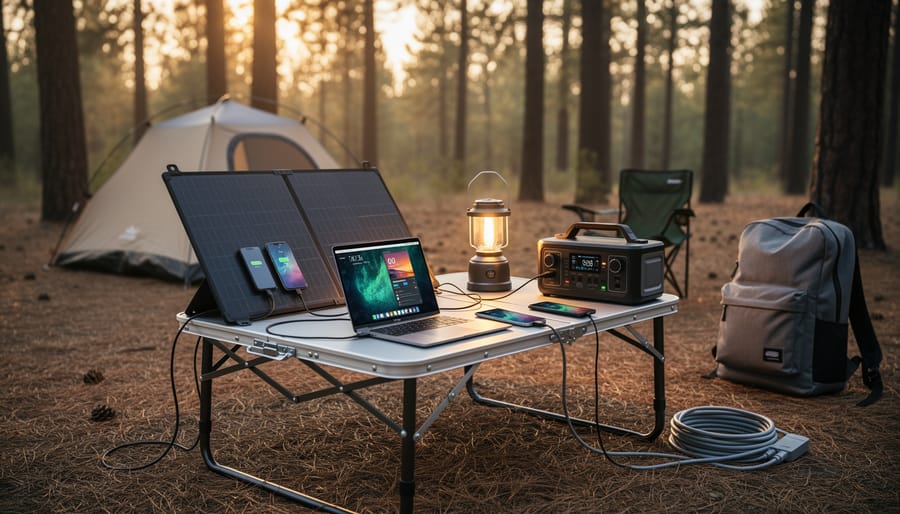
The biggest mistake camping trailer owners make is underestimating their power needs. Many buyers pick a 100-watt panel because it sounds sufficient, then discover their fridge, lights, and phone chargers together demand far more than that. Before buying any panel, list every device you’ll run, note its wattage and daily usage hours, then add 25% as a buffer for inefficiency and cloudy days. A weekend camper running LED lights and charging phones can get by with less; a full-timer operating a compressor fridge needs to calculate carefully.
Common missteps that lead to buyer’s remorse include:
- Choosing a charge controller incompatible with your battery type, which damages batteries or drastically reduces panel efficiency
- Ignoring weight limits on your trailer roof, especially with rigid glass panels that can exceed mounting capacity on older campers
- Mounting panels where tree shade hits for even part of the day, cutting output by 70% or more on most panel types
- Buying a system with no room to add panels later, forcing a complete replacement when power needs grow
- Selecting flexible panels for permanent mounting without understanding their shorter five to seven year lifespan compared to rigid options
Another frequent error is mixing panel types without checking voltage compatibility. If you start with a 12-volt portable panel and later add an 18-volt rigid panel, they won’t work together efficiently unless your charge controller handles multiple inputs. Plan your system architecture from the start, even if you’re only buying one panel now.
Don’t forget the mounting hardware and cable gauge in your budget. Buyers who spend their entire budget on panels often discover they need another hundred dollars for proper mounting brackets, waterproof cable entry glands, and thick enough wire to prevent voltage drop. Undersized 14-gauge wire on a 200-watt panel wastes power and creates a safety hazard. Calculate the total system cost upfront, not just the panel price.
Main Options Compared
Camping trailer owners typically choose between three main solar setups, each with distinct trade-offs. Portable folding panels offer maximum flexibility, you can angle them toward the sun and move them as shade shifts, but require setup each time you camp and must be stored inside when traveling. They’re ideal if you prefer not to drill into your trailer roof or frequently change camping spots.
Rigid mounted panels deliver the most power per square foot and handle wind, hail, and weather better than alternatives. They’re permanently installed, meaning your power system works immediately upon arrival. The downside? Installation demands roof penetrations, and you can’t reposition them if your trailer parks in shade.
Flexible mounted panels split the difference: they attach semi-permanently to curved or irregular roof surfaces without heavy mounting hardware, adding minimal weight. However, they typically cost more per watt, run hotter (reducing efficiency slightly), and may not last as long as rigid frames.
Your camping style determines the winner. Weekend warriors who value simplicity often choose portable. Full-timers prioritizing maximum output lean toward rigid. Those with aerodynamic or curved-roof trailers appreciate flexible panels’ adaptability.
Recommendations by Use Case
Weekend warriors with basic needs: A 100-200W portable folding panel works best when you’re running lights, phone chargers, and a small fridge. You can store it inside between trips and set up takes minutes. Prioritize portability over maximum output.
Full-time campers wanting roof-mounted systems: Combine 300-400 watts of rigid panels with an MPPT controller for reliable daily power. This handles laptops, refrigeration, water pumps, and occasional AC use without draining batteries overnight. Consider expandable kits that let you add panels as your power needs grow.
Budget-conscious buyers: Start with a complete 100-200W kit including the charge controller rather than piecing together components separately. You’ll avoid compatibility headaches and save money upfront, with room to add portable panels later if needed.
Curved roof trailers: Flexible panels are your only realistic option for proper surface contact. Accept the shorter lifespan as the trade-off for actually getting your panels mounted securely without creating leak points or stress fractures.
High-power users running multiple devices: Plan for 400+ watts minimum, using multiple panels to spread weight and maximize roof space efficiency.
Frequently Asked Questions About Camping Trailer Solar Panels
How many watts of solar panels do I need for my camping trailer?
Calculate your daily power consumption by adding up the watt-hours of all appliances you’ll run, then add 20-30% as a buffer. Most weekend campers find 200-400 watts sufficient, while full-timers often need 600-800 watts or more depending on air conditioning, refrigeration, and device charging needs.
Can I install solar panels on my camping trailer myself?
Yes, many camping trailer owners successfully install panels themselves, especially portable or flexible systems. Rigid roof-mounted panels require drilling and proper sealant application to prevent leaks, so if you’re uncomfortable working on your trailer’s roof, professional installation is worth considering.
Do solar panels work well in winter or cloudy weather?
Solar panels still generate power in winter and on overcast days, though output drops significantly compared to sunny conditions. Expect 10-25% of rated capacity on heavily clouded days and remember that shorter winter days mean fewer charging hours, so size your system accordingly if you camp year-round.
What type of battery works best with camping trailer solar panels?
Lithium batteries pair best with solar systems due to their faster charging, deeper discharge capability, and longer lifespan, though they cost more upfront. Traditional lead-acid or AGM batteries work fine for budget builds but require more panels to account for slower charge acceptance and shallower discharge limits.
How much maintenance do solar panels require?
Solar panels need minimal maintenance beyond occasional cleaning to remove dust, pollen, and debris that reduce efficiency. Inspect connections and mounting hardware annually, check for any physical damage after severe weather, and monitor your charge controller to ensure the system is performing as expected.
Is solar worth it for occasional weekend camping trips?
For weekend-only campers who stay at campgrounds with hookups, solar may not pay for itself quickly. However, if you prefer boondocking, dispersed camping, or simply want energy independence and quiet operation without running a generator, even weekend warriors find the convenience and environmental benefits worthwhile.
Beyond these common questions, think about your specific camping habits when evaluating whether solar makes sense. Someone who camps three weekends per month in remote locations will see returns much faster than someone who visits developed campgrounds twice per year. The initial investment ranges from a few hundred dollars for basic portable setups to several thousand for comprehensive roof-mounted systems with lithium batteries and high-capacity panels.
Consider solar an investment in freedom rather than purely a cost-saving measure. The ability to camp anywhere without worrying about finding shore power or listening to generator noise transforms the experience. Environmental benefits aside, many campers report that solar panels change how they think about energy use, making them more mindful and efficient with power consumption overall.
Choosing the right solar panels for your camping trailer comes down to understanding three things: how much power you actually need, where and how you camp, and what installation constraints your trailer presents. There’s no universal best panel, the 100-watt portable that works perfectly for weekend warriors who need supplemental power won’t cut it for full-timers running refrigerators and air conditioning off-grid.
Start by calculating your daily watt-hour consumption, then match that to panel capacity while accounting for real-world inefficiencies and weather variability. Consider whether flexible panels suit your curved roof better than rigid options, or if portables give you the flexibility to chase sunlight throughout the day. Weight matters. Expandability matters. Your charge controller compatibility matters. These aren’t minor details; they determine whether your system actually works when you’re three days into the backcountry.
Beyond the practical benefits, quiet power, no generator maintenance, freedom from hookups, going solar aligns with the reason many of us camp in the first place: to connect with nature without harming it. Solar lets you enjoy modern conveniences while minimizing your environmental footprint. That’s not just marketing speak; it’s the reality of generating clean energy from the same sun that’s lighting your campsite.
Take the time to match your system to your actual needs rather than guessing or buying the cheapest option. Done right, solar transforms how you camp, opening up locations and experiences that grid-dependent camping simply can’t offer.


