

The best solar generator for most households heading into 2026 is the Jackery Solar Generator 1500 v2, because it bundles the power station with solar panels, so you’re ready to harvest sunlight the moment an outage hits. If you only need light-duty power, the Jackery Explorer 300 is the budget-friendly starter we’d point you to first.
In the interest of transparency, we earn a commission on some purchases made through links on this site. As an Amazon Associate I earn from qualifying purchases.
A solar generator, for the record, is a battery-based power station paired with solar panels. You store energy, then draw it on demand, with no fuel, no fumes, and no noise. That’s a real sustainability win over a gas unit, and it means you can run a fridge, charge devices, or keep a router alive using sunshine alone.
Our recommendations come from hands-on evaluation of how each model handles setup, portability, and everyday loads. Solar generator reviews often bury you in spec sheets. We focus instead on matching capacity to the job: outage prep at home, weekend camping, or something bigger.
Below you’ll find a quick-scan list of top solar generator picks, a comparison table, a detailed section on every model with a clear best-for label, and a sizing guide to help you buy the right amount of power the first time.
Top Picks at a Glance: Which Solar Generator Fits Which Buyer
Choosing between solar generators gets easier once you match the model to the job. Below is a quick-scan list, with each pick tied to the buyer it fits best. If you want a broader field before narrowing down, our roundup of portable solar generators covers camping, backup and off-grid use, and our guide to power stations for camping goes deeper on trail and campsite setups.
- Best bundled setup for outage prep: Jackery Solar Generator 1500 v2, a power station paired with solar panels so you can start charging from the sun without sourcing parts separately.
- Best budget-friendly starter: Jackery Explorer 300, a compact, lightweight option for phones, laptops, lights and other small devices.
We kept the list short on purpose. Each entry above links to its full pick later in the article, where we explain who it suits and what it can and cannot power.
It’s also worth knowing that no single outlet agrees on one winner. Several publications reach broadly similar conclusions about what makes a good solar generator, favoring a clear match between capacity and real needs over the biggest number on the box. That is the same logic behind our top solar generator picks. If you’re reading solar generator reviews elsewhere, check that a model fits your actual use, whether that’s outage prep, car camping or keeping small electronics running. Specs and availability change, so confirm current details on the manufacturer’s page before you buy.
How We Tested and Evaluated Solar Generators
We evaluated these solar generators the way most households actually shop for them: by comparing the features that decide whether a unit does its job. That meant looking at battery capacity, output wattage, charging speed, solar input and expansion options, plus how each model fits real situations like a power outage, a weekend of car camping, or off-grid use. We also weighed warranty and support, because a power station is a multi-year purchase and good backing matters.
Value is the part people most often get wrong. Instead of chasing the lowest sticker, we judged capability per unit of cost, in words rather than amounts. A budget-friendly starter like the Jackery Explorer 300 earns its place by doing a small job well. A bundled option like the Jackery Solar Generator 1500 v2 earns it by getting you to a working solar setup without piecing parts together.
Spec sheets use shorthand that can blur the picture, so here are the terms that matter most:
- Watt-hours (Wh)
- The size of the battery’s “fuel tank.” A higher Wh number means more total energy stored and longer runtime.
- Running vs. surge watts (W)
- Running watts are what the unit delivers continuously. Surge output is a brief burst that helps start motor-driven appliances, which pull extra power for a moment.
- Solar input
- How much power the generator can accept from solar panels at once. More input generally means faster recharging in good sun.
- LiFePO4 chemistry
- A lithium iron phosphate battery type known for a long lifespan and stable, safe performance compared with older lithium formulas.
- Pass-through charging
- The ability to power devices while the generator itself is recharging from the wall or from solar.
One firm rule applies to everything you read here: confirm the numbers on the manufacturer’s own page before you buy. Models get refreshed, bundles change, and availability shifts, so we describe each pick by category and best use rather than quoting figures that could go stale. Treat our comparisons as a guide to which type of unit suits you, then verify the current details yourself. That habit keeps your purchase matched to real needs, not a spec that no longer applies.
Why Trust Wacked Solar Reviews
At Wacked Solar Reviews, our mission is simple: help more people switch to clean energy with confidence. Every solar generator we cover gets the same hands-on, practical lens, from how it handles outages to how it behaves on a camping trip.
We keep our product information current, because models and availability change, and we point you back to the manufacturer’s page for final specs. When something falls short, we say so constructively and explain who it still suits, rather than dismissing it outright. Our recommendations stay unbiased and tied to real use cases, not hype.
We also care about the bigger picture. A solar-charged power station runs quietly, burns no fuel, and produces no exhaust at the point of use, so it’s a cleaner, calmer alternative to a gas generator. That’s the thinking behind every solar generator review we publish.
Solar Generator Comparison Table: Capacity, Output, and Best Use
The table below sets the two picks side by side so you can match a solar generator to your own situation. It leaves out numbers we haven’t confirmed, because specs and availability change often, and you should check the manufacturer’s page before you buy. If you’ve been reading solar generator reviews and still can’t tell the options apart, a plain comparison like this is usually the quickest way to see where each unit fits.
| Model | Best for | Size class | Value tier | Ideal buyer |
|---|---|---|---|---|
| Jackery Solar Generator 1500 v2 | Outage prep and extended trips | Mid-size bundle with solar panel | Mid-range | Homeowners who want a ready-to-use solar setup |
| Jackery Explorer 300 | Light use and short trips | Compact and portable | Budget | Campers and first-time buyers charging small devices |
Here is how to read it. The Jackery Solar Generator 1500 v2 sits higher on capability because it pairs a power station with a panel, so you aren’t hunting for compatible gear. That makes it the more sensible choice if your priority is keeping essentials running during an outage while recharging from sunlight.
The Jackery Explorer 300 is the opposite kind of tool. It’s small enough to toss in a bag, and it suits phones, laptops, and lights rather than heavy appliances. Treat it as a minimal emergency kit or a weekend companion, not a whole-home solution.
Value is where buyers most often slip up. Judge each unit by what it can realistically power for your needs, not by which one looks cheapest or biggest. If your loads are modest, the budget pick may be all you need. If you want longer runtimes and easier solar charging, the mid-range bundle earns its place as a top solar generator for that job.
1. Jackery Solar Generator 1500 v2, Best Bundled Solar Generator for Outage Prep
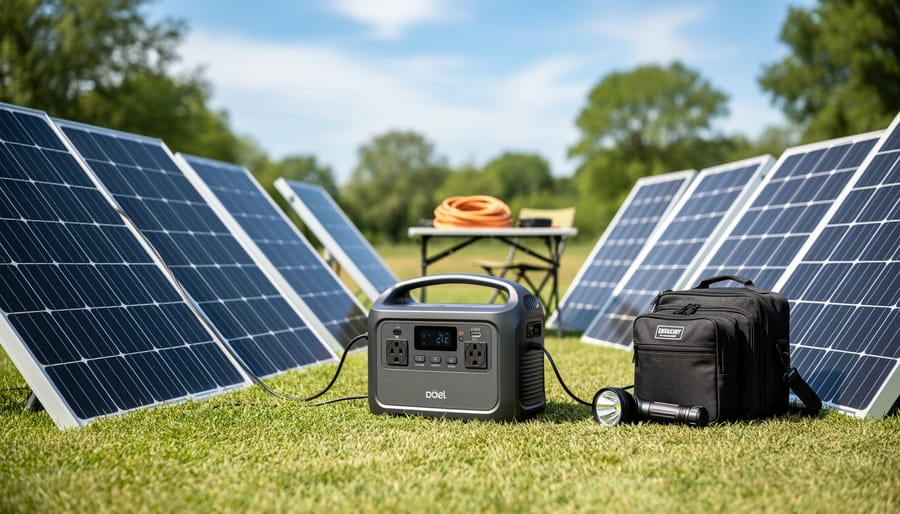
The Jackery Solar Generator 1500 v2 earns its place here because it solves the part of outage prep that trips up most first-time buyers: figuring out which panels work with which power station. Instead of cross-checking compatibility yourself, you get a pairing built to work together, so the setup feels closer to plug-and-play than to a weekend electronics project.
That bundled approach is the real appeal. A power station on its own is only as useful as its last charge, and when the grid is down, the sun is the only refill you can count on. Having panels designed for the unit means less guesswork about connectors and fewer surprises on the day you actually need it.
In terms of positioning, this is a mid-size option, sitting above the compact starters and below the whole-home systems. That makes it a sensible fit for the things most people worry about during an outage: keeping phones and laptops charged, running lights, and powering a few essential devices. It also suits extended car camping or a long weekend off-grid, where a pocket-sized unit would run dry too quickly.
Setup is where our hands-on impression was strongest. Lining up panels, connecting them, and getting the unit charging felt straightforward, which matters when you’re doing it in poor conditions rather than on a sunny afternoon. A quiet, fuel-free setup also means no fumes, no fuel runs, and no noise complaints from neighbors, a real sustainability and convenience win over a gas generator.
Before you buy, check the current details directly on Jackery’s product page. Capacity, output, panel configuration, and warranty terms can change between versions, so confirm them rather than relying on a roundup. Look closely at the warranty length and what support covers, since a long-term backup device is only as good as the service behind it.
This pick suits homeowners who want a ready-to-use solar backup without building a system from parts, and campers who want more staying power than a compact unit offers. If you need to run heavy appliances or back up an entire home, you’ll want to step up to a larger model. For everyone else, the Jackery Solar Generator 1500 v2 is a well-balanced place to start.
2. Jackery Explorer 300, Best Budget-Friendly Starter for Light Use
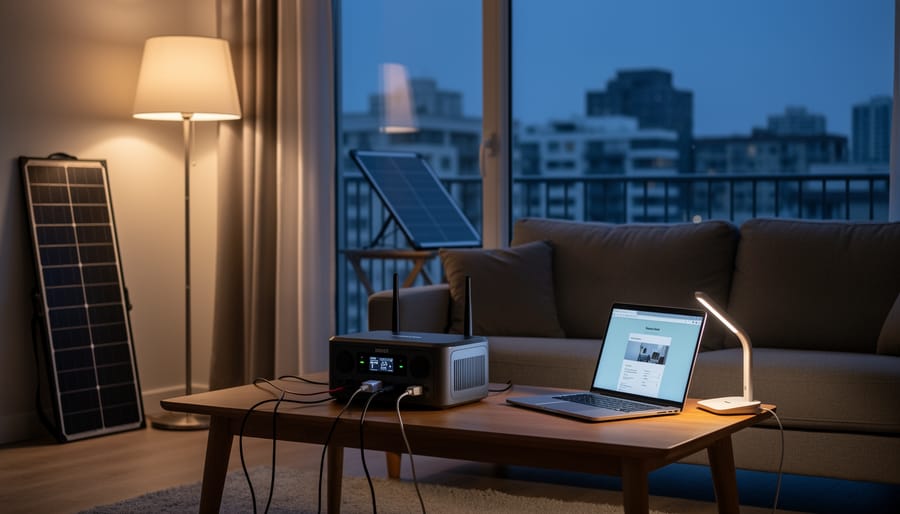
The Jackery Explorer 300 is the pick for anyone who wants a quiet, fuel-free starting point without buying into a big system. In our hands-on evaluation, it behaves like what it is: a compact, lightweight battery you can carry in one hand and tuck into a bag, a trunk, or an emergency kit. For phones, laptops, camping lights, and other small gadgets on short trips, it covers the basics well, and in solar generator reviews its size and simplicity are what usually make it a favorite entry point.
Value here means budget. It is among the more affordable ways to get solar-charged power into your routine, which makes it a sensible first step if you are curious about going solar but not ready to commit to a larger setup. Check the exact capacity and output rating on Jackery’s product page before you buy, since specs and availability change.
Be honest with yourself about what it can’t do. This is not a home backup unit, and it is not meant for a refrigerator, space heater, power tools, or anything else that draws serious wattage. Match it to light jobs and it shines. Ask it to do more and you will be disappointed.
Pairing it with the right panel matters too. If you are weighing options for weekend trips, our guide to the best solar panels for camping is a good place to start. Van and RV owners may want to read up on flexible solar panels, and anyone towing a rig can compare camping trailer solar panels before settling on a setup.
Pros
- Compact and lightweight, so it travels easily and fits a minimal emergency kit.
- Budget-friendly entry point into solar-charged, fuel-free power.
- Quiet operation with no fumes, suitable for camping and tight spaces.
- Well suited to phones, laptops, lights, and other small devices.
Cons
- Not designed for home backup or running large appliances.
- Limited capacity means short trips and light loads only.
- Heavier-draw devices like heaters or power tools are out of its range.
- Solar recharging is slower than with larger, higher-input models.
Think of the Explorer 300 as the right tool for a small job. Used that way, it delivers reliable, clean power without the cost or bulk of a bigger system.
How to Choose the Right Solar Generator for Your Home or Adventures
Choosing a solar generator comes down to matching what you need to run with what a unit can deliver. Start with the sizing process below, and treat the number you land on as a guide, not a guarantee.
- List every device you want to power, from a phone charger to a refrigerator.
- Find each device’s running watts on its label or manual, then add them up for the total you’d run at once.
- Estimate watt-hours by multiplying running watts by the hours you want to run them. A 60-watt fan for ten hours needs roughly 600 watt-hours.
- Choose a capacity above that figure, since conversion losses mean you never get every stored watt-hour.
- Match solar input to your recharge goal. More panel capacity means faster refills, but only when you have sun and the space to place panels.
- Check warranty and support terms on the manufacturer’s page before you commit.
Once you have your numbers, decide between portable and large-capacity. A compact unit like the Jackery Explorer 300 suits phones, laptops and lights on short trips, but it isn’t meant for heavy loads. For outage prep or longer stays, a bundled, mid-size setup like the Jackery Solar Generator 1500 v2 gives you more runtime and a ready-to-use solar pairing. Be honest about your real use. Buying the biggest battery you can find often means paying for capacity you’ll never touch.
Think about value as capability per unit of cost, not the lowest sticker. A budget unit that covers your actual loads beats a premium one that sits half-used. Warranty and support matter just as much, because a battery should serve you for years.
Smaller batteries and accessories need care too. If you’re keeping a vehicle or RV battery topped off, a dedicated solar battery charger can handle that job, and our notes on off-grid battery maintenance cover keeping those batteries healthy between uses.
Finally, size your panels sensibly. Oversizing wastes money, while undersizing leaves you waiting on slow recharges. Every watt-hour you pull from the sun is quiet, fuel-free power, which is the sustainability payoff that makes solar charging worth the effort.
What to Watch For
Before you buy, the biggest trap is shopping by the largest number on the box. A bigger battery does not help if you never plan to run the devices that justify it, and a smaller one will frustrate you if you expect it to carry a heavy appliance through an outage. Start with the job, then pick the size.
For most homes, that means the Jackery Solar Generator 1500 v2 is the better fit when you want a ready-to-use solar setup for outage prep, while the Jackery Explorer 300 suits light, short-term use like phones, laptops, and lights. Also look past the product itself. Warranty terms and support responsiveness matter more than most buyers expect, because a solar generator is a long-term purchase. Treat solar generator reviews, including ours, as a starting point, then check the details that apply to your own setup.
Solar Generator Questions Answered

What is the difference between a solar generator and a portable power station?
A portable power station is the battery and inverter unit on its own, while a solar generator is that unit paired with solar panels so it can recharge from sunlight. Many buyers use the two terms interchangeably, so check what’s actually in the box before you compare.
Can a solar generator run a refrigerator during an outage?
Often yes, but only if the unit’s output can handle the fridge’s startup surge and its battery holds enough capacity for the hours you need. Larger bundles like the Jackery Solar Generator 1500 v2 suit essentials such as a fridge, lights and phone charging, while a compact model like the Jackery Explorer 300 is better kept for small devices.
How long does solar recharging take, and does it work in cloudy weather?
Recharge time depends on panel wattage, sun angle and battery size, so a full charge can take anywhere from a few hours to a couple of days. Panels still produce power under cloud cover, just at a noticeably reduced rate, which makes wall or car charging a useful backup.
Is it safe to use a solar generator indoors, and how long do the batteries last?
Because there’s no combustion, you can run the power station itself indoors without exhaust fumes, as long as it has ventilation and isn’t covered or exposed to moisture. Battery lifespan is measured in charge cycles and varies by chemistry and how you use it, so confirm the manufacturer’s stated cycle life and warranty on its product page.
Those answers cover the basics, but your own situation matters most. Think about which devices you’d truly want running in an outage, and how much sun your location realistically gets. Matching those two things to a model’s capacity and output is what separates a setup that quietly does its job from one that leaves you frustrated.
Key Takeaways Before You Buy
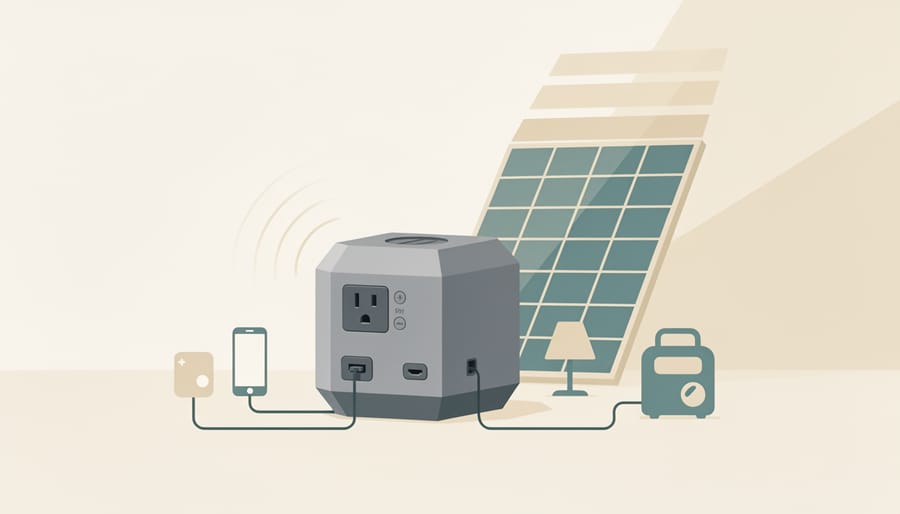
Three habits separate a good solar generator purchase from a regretted one, and all of them come down to matching the gear to your actual life rather than to a spec sheet.
Start with your real needs. List the devices you would want running during an outage or on a trip, then choose capacity to cover them with some breathing room. A larger unit is not automatically a better one. If you only charge phones, lights and a laptop, a compact model will serve you better than a heavy, oversized one you rarely carry.
Next, think about the job. Car camping, outage prep and light daily use each call for different trade-offs in portability, solar input and runtime. That is why this roundup groups its picks by use case instead of ranking everything on one scale.
Finally, treat every detail as a moving target. Models get refreshed, bundles change and stock comes and goes. Recheck specifications, warranty terms and availability on the manufacturer’s page right before you commit, so the generator you order is the one you actually researched.
After testing and comparing the options, the best solar generator comes down to matching the unit to your life. The Jackery Solar Generator 1500 v2 is our pick for most households, especially if you want a ready-to-use bundle for outage prep with panels already paired to the power station. If you only need to keep phones, laptops, and lights running on a short trip or in a basic emergency kit, the Jackery Explorer 300 is a budget-friendly starter that does the job without overbuying.
Either way, you’re choosing clean, quiet, fuel-free power that charges from the sun instead of burning gasoline. No fumes, no noise, no hauling fuel cans. That’s a win for your wallet and the planet. Before you buy, confirm current specs and availability on the manufacturer’s page, since models change. We keep updating our solar generator reviews, so come back often for fresh picks.
Final Verdict
If you want one solar generator that is ready to go, the Jackery Solar Generator 1500 v2 is the one we’d pick. It wins because the power station and solar panel pairing is bundled, so outage prep and extended trips don’t start with a compatibility puzzle. It suits households and adventurers who want clean, quiet, fuel-free power with minimal setup.


